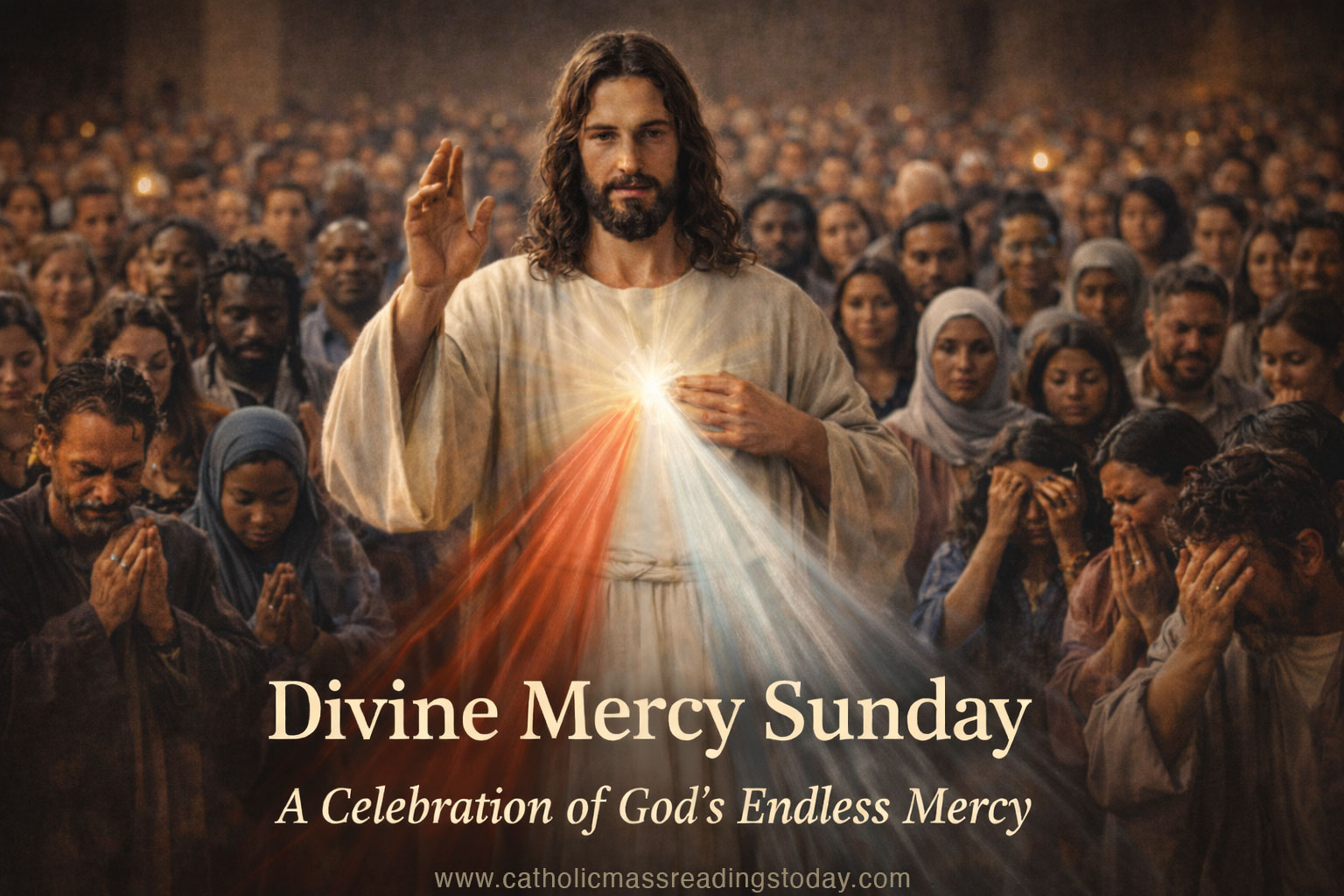
Divine Mercy Sunday, celebrated on the first Sunday after Easter, is one of the most beautiful and deeply consoling feasts in the Catholic Church. Rooted in the message of Christ’s Resurrection, it is a day that invites the faithful to enter more deeply into the mystery of God’s mercy, a mercy that is not earned, but freely given.
Instituted by Pope Saint John Paul II in the year 2000, Divine Mercy Sunday is closely connected to the revelations received by Saint Faustina Kowalska, a humble Polish nun whom Jesus entrusted with the message of Divine Mercy. Through her diary, the Church has come to understand more fully that the heart of the Gospel is mercy, God’s loving response to human weakness and sin.
The Heart of Divine Mercy: Flowing from the Resurrection
Divine Mercy Sunday is not separate from Easter but is its fulfillment.
The Resurrection of Jesus is the ultimate proof that sin and death do not have the final word. When Christ rose from the dead, He did not come back with judgment, but with peace. In the Gospel of this day, His first words to the disciples are:
“Peace be with you.”
And then, something even more profound, He shows them His wounds.
The wounds remain, but they are transformed. No longer signs of suffering alone, they become the source of mercy. From His pierced side, as the Church teaches, flowed blood and water, symbols of the Sacraments, especially Baptism and the Eucharist. These are the channels through which Divine Mercy continues to reach us today.
The Message Given to Saint Faustina
Jesus entrusted Saint Faustina with a simple but powerful message:
“Jesus, I trust in You.”
This is the essence of Divine Mercy spirituality.
It is not about perfection. It is about trust.
In her diary, Jesus repeatedly emphasizes that no soul is beyond His mercy. No matter how great the sin, no matter how far one has wandered, God’s mercy is greater. What He asks in return is trust, a childlike confidence in His love.
This message is especially important in today’s world, where many people carry hidden burdens of guilt, shame, or a sense of unworthiness. Divine Mercy Sunday reminds us that God does not tire of forgiving. It is we who sometimes hesitate to return.
The Gift of the Divine Mercy Indulgence
The Church, in her maternal care, attaches a special grace to this day.
On Divine Mercy Sunday, the faithful can receive a plenary indulgence, which removes all temporal punishment due to sin. To receive this grace, the Church asks for:
- Confession (within a reasonable time)
- Reception of Holy Communion
- Prayer for the intentions of the Holy Father
- Complete detachment from sin, even venial sin
But beyond these requirements, what matters most is the disposition of the heart, approaching God with humility, repentance, and trust in His mercy.
The Chaplet and Devotion
One of the most well known practices associated with this feast is the Divine Mercy Chaplet. Prayed using rosary beads, it focuses on offering the Passion of Christ to the Father in atonement for our sins and those of the whole world.
At the center of this devotion is the image of Divine Mercy: Jesus with rays of red and pale light flowing from His heart. These rays represent the blood and water that poured out for our salvation.
This devotion is not meant to replace the Mass or the Sacraments, but to deepen our understanding of them. It draws us back to the Cross, and ultimately to the Resurrection.
A Message for the World Today
Divine Mercy Sunday speaks powerfully to our modern world.
We live in a time marked by division, anxiety, and a deep hunger for healing. Many people struggle with forgiveness, both in giving it and or receiving it. In such a world, the message of Divine Mercy is not just relevant; it is essential.
It reminds us that:
- Mercy is stronger than sin
- Love is stronger than fear
- Hope is stronger than despair
And it calls each of us not only to receive mercy, but to become instruments of it in the lives of others.
Living Divine Mercy Daily
Divine Mercy is not meant to be confined to one Sunday.
It is a way of life.
To live Divine Mercy means:
- Choosing forgiveness over resentment
- Showing compassion to those who suffer
- Trusting God even when life is uncertain
- Turning back to Him again and again
In simple ways, through patience, kindness, and understanding we become reflections of the mercy we have received.
Conclusion: Trusting in His Mercy
At the center of Divine Mercy Sunday is a deeply personal invitation.
Christ stands before each of us, just as He stood before His disciples, and says:
“Peace be with you.”
He does not demand perfection. He offers mercy.
And the only response He asks for is trust.
So today, as the Church celebrates Divine Mercy Sunday, we are invited to open our hearts and to let go of fear, to return to Him, and to say with sincerity:
“Jesus, I trust in You.”
Because in the end, it is not our strength that saves us but it is His mercy that carries us home.