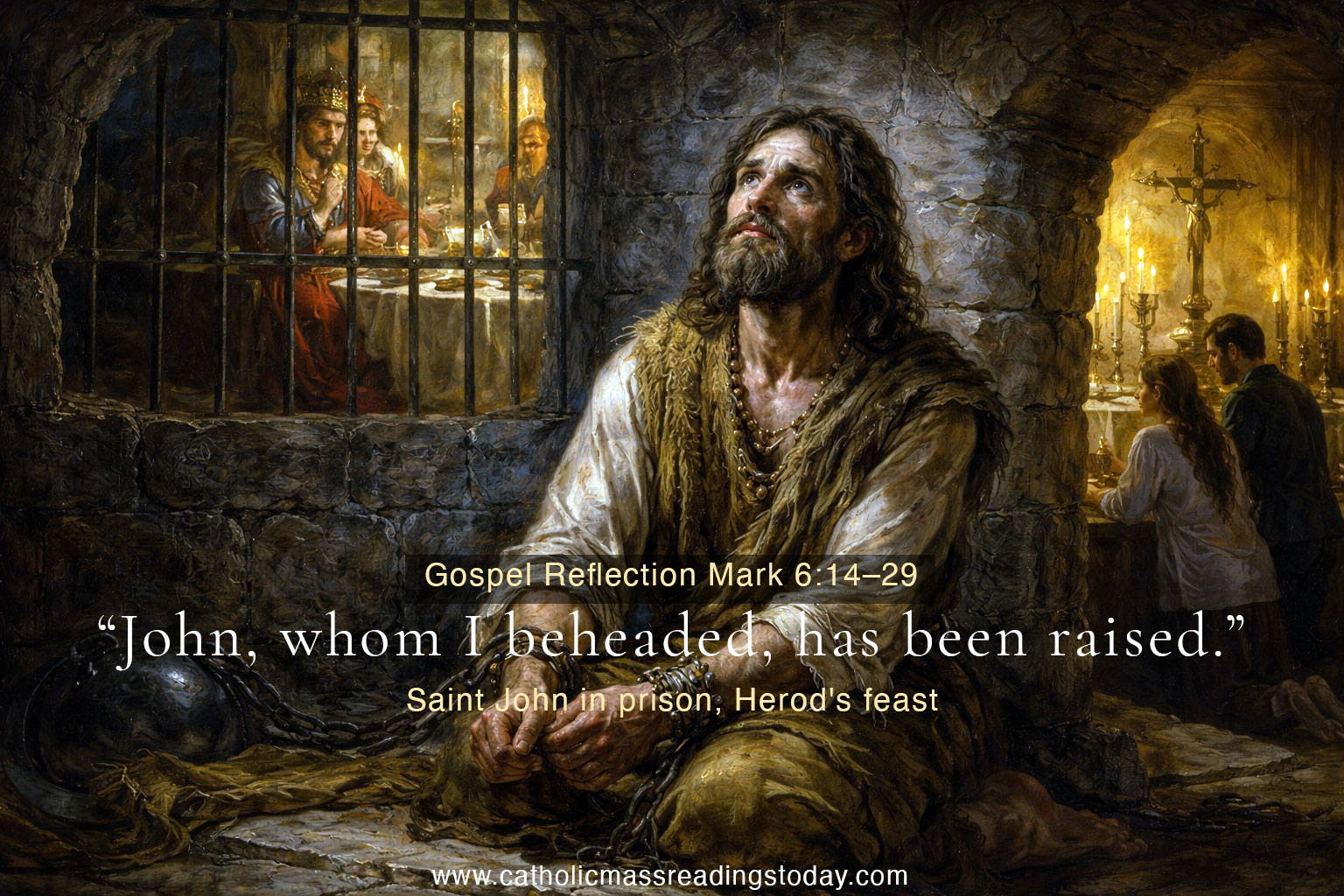
Reflection on Mark 6:14–29
“John, whom I beheaded, has been raised.”
This Gospel on Mark 6:14–29 puts us in one of the most sobering and disturbing moments in the life of the Church: the martyrdom of Saint John the Baptist. It is not an easy read, yet it is very important, for it challenges us with truth, conscience, courage, and the cost of discipleship.
1. The Uncomfortable Conscience of Herod
We begin not with John, but with Herod. When he hears of Jesus, his first reaction is fear which is naturally what most of us would do: “John, whom I beheaded, has been raised.” The guilt in him is louder than the silence in his soul. Herod tries to kill the truth by silencing the prophet, yet the truth does not die with the prophet’s body. Integrity cannot be killed.
Herod knows John is righteous and holy, he listens to him gladly and even protects him up to a point. He is not entirely evil; however, he is profoundly weak. Herod wants to live in two worlds at the same time: to appreciate holiness while rejecting conversion; to respect the truth while continuing in sin.
This is a warning to us. We do enjoy reading the Gospel but resist its demands. It is possible to admire the saints while refusing to imitate their good deeds. Herod is a good example of what happens when truth is heard but not obeyed: it becomes a source of suffering rather than salvation.
2. John the Baptist: The Cost of Speaking the Truth
John the Baptist stands as a towering figure of righteousness. His sin was not political rebellion, nor personal ambition, but faithfulness to God’s law. “It is not lawful for you…” These words cost him his freedom and at the end his life.
John’s actions teach us that love and truth cannot be separated. His correction of Herod was not hatred; it was an act of love. True love does not encourage what destroys the soul. In a world that is increasingly unwillingness to accept views, beliefs, or behavior that differ from one’s own, John reminds us that silence in the face of grave injustice or immorality is not humanity, it is weakness.
As priests, parents, teachers, and all baptized Christians, this is a serious analysis of conscience. Do we speak the truth when it is inconvenient for us? Do we witness to Christ when it costs us popularity, security, or comfort? Or do we remain silent to protect ourselves?
3. The Power of Sin and the Slippery Slope of Compromise
Notice how this tragedy progresses. It begins with an unlawful relationship then grows into resentment, manipulation, rash promises, and finally murder. Sin is not something that doesn’t move or change; it always demands more.
Herod’s serious mistake was not only his immoral relationship, but his refusal to break with it when challenged. There after he showed his pride by choosing not to lose face before his guests. A foolish oath becomes more important than an innocent life.
How often do we justify sin to preserve our image? How often do we choose human respect over God’s command? This Gospel warns us that small compromises with evil intentions only makes it easier for great disasters.
4. The Silence of God and the Victory of Martyrdom
John dies in a prison cell, not on a battlefield, not in public triumph, but in apparent defeat. Yet the Church knows better. His death seems like the end but its a witness. His blood speaks louder than Herod’s banquet music.
Our world today may silence prophets, but it cannot kill their message. John prepares the way not only by his preaching, but by his death. He foreshadows Christ Himself, who will also be unjustly condemned and killed by a weak ruler, and buried by his faithful disciples.
Martyrdom reminds us that faithfulness to God is never wasted. Even when it appears to fail, it bears fruit in eternity.
5. A Word for Today
This Gospel is painfully relevant today. We live in a culture that often celebrates riches, mocks holiness, and punishes those who speak uncomfortable truths. Like Herod’s court, noise and pleasure can drown out conscience, though only temporarily.
Saint John the Baptist calls us live with integrity: one life, one truth, one Lord. He teaches us that it is better to lose everything than to lose our soul.
Let us Pray
Lord God,
You raised up Saint John the Baptist
to prepare the way for Your Son
by preaching repentance and living the truth without fear.
Give us the courage of John
when we are tempted to remain silent.
Strengthen our consciences
when we are pressured to compromise.
Free us from the fear of human opinion
and root our lives firmly in Your truth.
Heal our hearts where guilt or sin has taken hold,
and grant us the grace of true repentance.
May we never admire holiness without seeking conversion,
nor hear Your Word without obeying it.
Through the intercession of Saint John the Baptist,
make us faithful witnesses to the Gospel,
even when it costs us dearly.
We ask this through Christ our Lord.
Amen.
Saint John the Baptist, pray for us.
In the name of the Father, and of the Son, and of the Holy Spirit. Amen