Holy Thursday often also called Maundy Thursday is one of the most intimate and moving days in the Catholic Church. If Good Friday shows us the depth of Christ’s sacrifice, then Holy Thursday reveals the heart behind that sacrifice.
This is the day everything becomes personal.
It is the evening of the Last Supper. The night of quiet gestures that speak louder than words. The beginning of the Passion not with violence, but with love poured out in the simplest, most human ways.
Why “Holy Thursday” or “Maundy Thursday”?
To a Catholic, both terms matter:
- Holy Thursday is more commonly used in Catholic contexts worldwide.
- Maundy Thursday (from the Latin mandatum, meaning “command”) is widely used, especially in English speaking countries.
That “command” comes from Jesus’ words:
“A new commandment I give to you, that you love one another as I have loved you.”
So whether you say Holy Thursday Mass, Maundy Thursday meaning, or Last Supper significance, you are being led into the same mystery.
What Happened on Holy Thursday?
Holy Thursday brings together several key moments in the life of Jesus, moments that define Catholic faith to this day.
1. The Last Supper
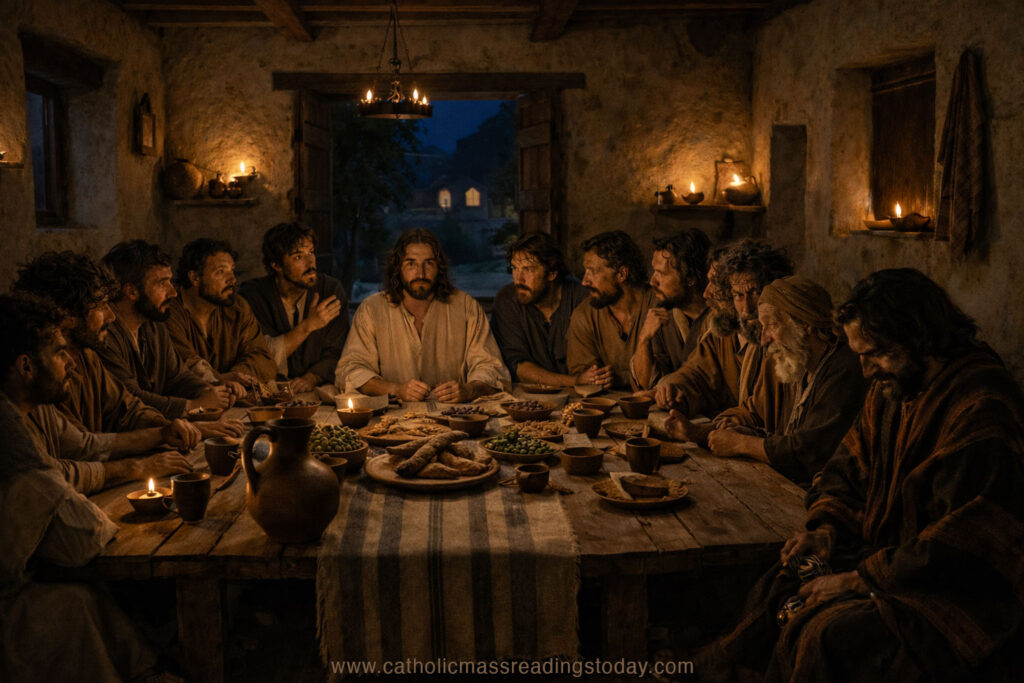
On this night, Jesus gathered with His disciples to celebrate the Passover.
But something changed.
In the middle of the meal, He took bread, blessed it, broke it, and gave it to them:
“This is my body.”
Then He took the cup:
“This is my blood… poured out for many.”
This is not just a symbolic act in Catholic teaching.
This is the institution of the Eucharist the very heart of the Church.
From this moment on, every Mass is connected to that table.
Not a repetition, but a participation in that same sacrifice and love.
2. The Institution of the Priesthood
At that same table, Jesus told His apostles:
“Do this in memory of me.”
With those words, He entrusted them and the Church with something sacred.
This is why Holy Thursday is also deeply connected to the priesthood.
The priest is not just a leader or speaker.
He stands in persona Christi in the person of Christ especially during the Eucharist.
Without Holy Thursday, there is no Mass as we know it.
3. The Washing of the Feet
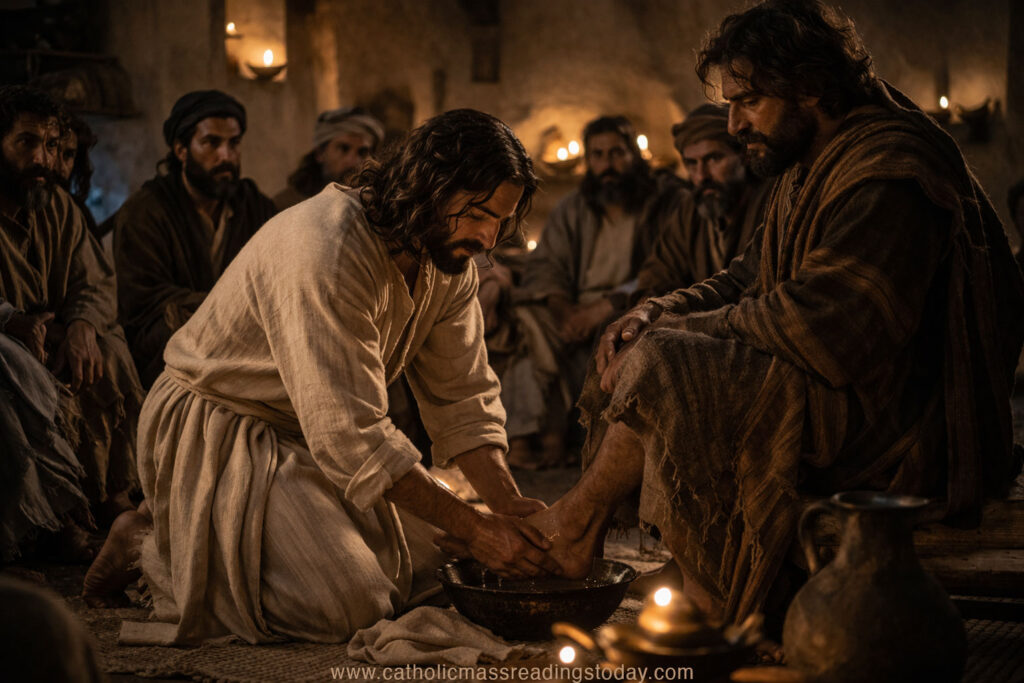
Then something unexpected happens.
Jesus, the Teacher, the Master, gets up… kneels down… and begins washing the feet of His disciples.
Even Judas.
This moment is easy to overlook, but it may be one of the most powerful actions in the entire Gospel.
In that culture, washing feet was the work of servants.
And yet, Christ does it Himself.
Not as a performance.
Not to impress.
But to show what love actually looks like.
“If I then, your Lord and Teacher, have washed your feet, you also ought to wash one another’s feet.”
This is where Christianity becomes real.
Not in words but in how we treat others.
4. The Beginning of the Agony
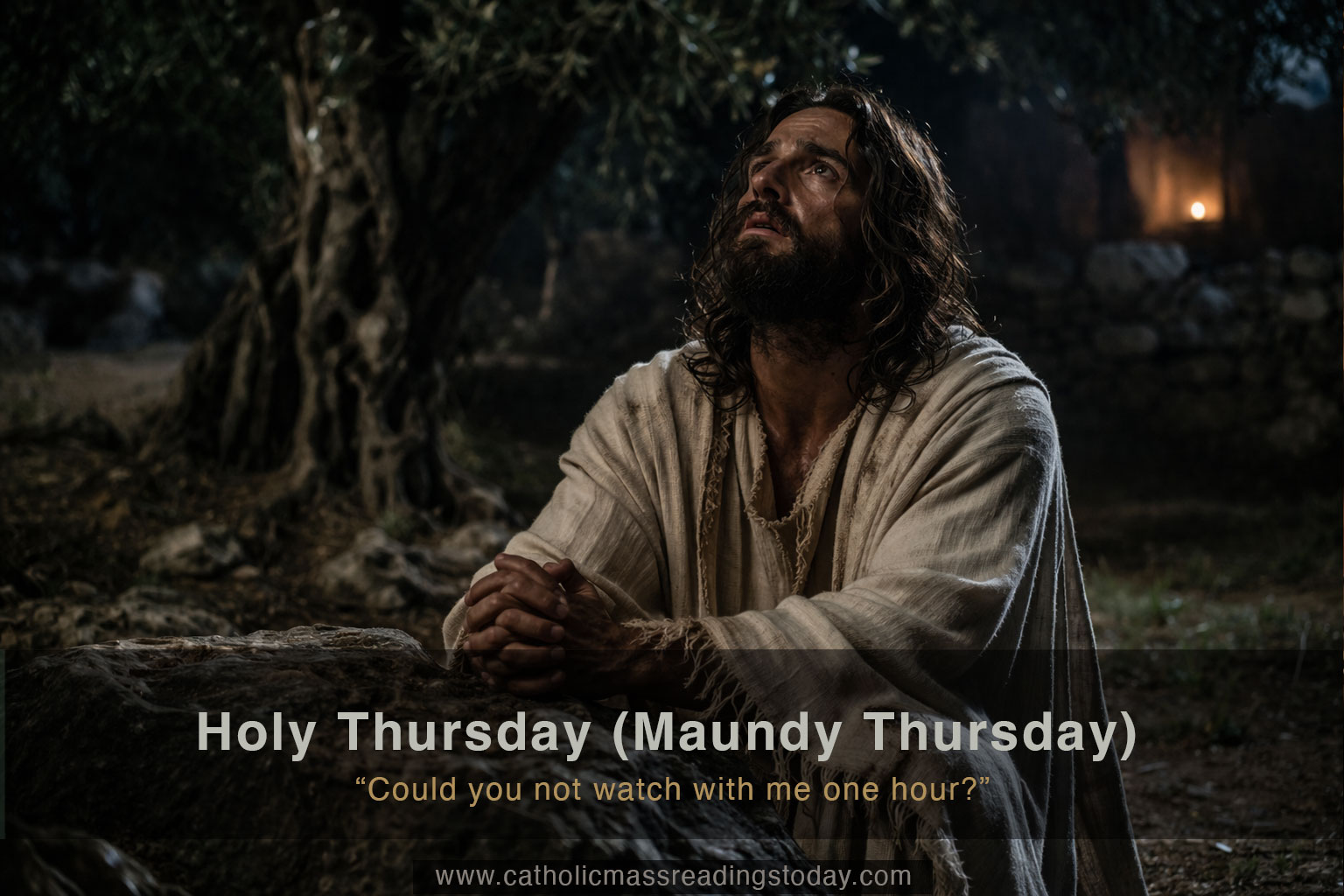
After the meal, Jesus goes to the Garden of Gethsemane.
Here, the tone shifts.
The same Jesus who broke bread now falls to the ground in prayer.
“Father… if it be possible, let this cup pass from me.”
This is where we see His humanity in full.
He feels the weight.
He knows what is coming.
And still… He says yes.
Holy Thursday is not just about the table.
It is also about the quiet surrender in the dark.
The Meaning of Holy Thursday in Catholic Life
Holy Thursday is about three things, deeply connected:
1. The Eucharist – God With Us
Not distant. Not abstract.
But present.
The Eucharist is Christ giving Himself continually to His people.
2. Service – Love Made Visible
Not spoken. Not theoretical.
But lived.
Washing feet becomes the model for how we love others especially when it’s inconvenient or unnoticed.
3. Surrender – Trust in God’s Will
Not easy. Not comfortable.
But necessary.
Gethsemane reminds us that faith is not the absence of struggle but the decision to trust God within it.
How Holy Thursday Is Celebrated in the Catholic Church
The Mass of the Lord’s Supper
This is the main liturgy of Holy Thursday evening.
Key elements include:
- The Gloria is sung (often with bells, which then fall silent until Easter)
- The washing of feet (Mandatum)
- The institution of the Eucharist
- The transfer of the Blessed Sacrament to a place of repose
After this, the altar is stripped.
Everything becomes quiet.
The Church begins to feel the weight of what is coming.
Adoration at the Altar of Repose
After Mass, many remain in silent prayer.
It is a time to “stay with Jesus,” echoing His words in Gethsemane:
“Could you not watch with me one hour?”
This is one of the most personal invitations of Holy Week.
Not to do much.
Just to be there.
What Is Expected of Us on Holy Thursday?
Holy Thursday is not just something we observe, it is something we are invited into.
1. Receive the Eucharist with Awareness
Not out of routine.
But with the understanding that this is Christ giving Himself to you.
2. Reflect on How You Love Others
Who needs your patience?
Your forgiveness?
Your time?
Foot washing is not about water.
It’s about humility.
3. Spend Time in Silence
Even 10 to 15 minutes.
Step away from noise.
Sit quietly.
Be present with God.
4. Examine Your Own “Yes” to God
Where is God asking you to trust Him?
Where are you resisting?
Holy Thursday gently asks:
Will you follow, even when it’s difficult?
Holy Thursday in Today’s World
We live in a world that often celebrates power, visibility, and self interest.
Holy Thursday turns all of that upside down.
It shows us:
- Greatness in kneeling
- Strength in serving
- Victory in surrender
And maybe that’s why it still speaks so strongly today.
Because deep down, people are not just looking for success.
They are looking for meaning.
Final Reflection
Holy Thursday is quiet compared to Good Friday.
It does not shout.
But it stays with you.
It reminds us that before the Cross, there was a table.
Before the suffering, there was love.
Before everything was taken, Christ had already given everything.
And He still does.
Every Mass.
Every Eucharist.
Every act of love we choose to make.