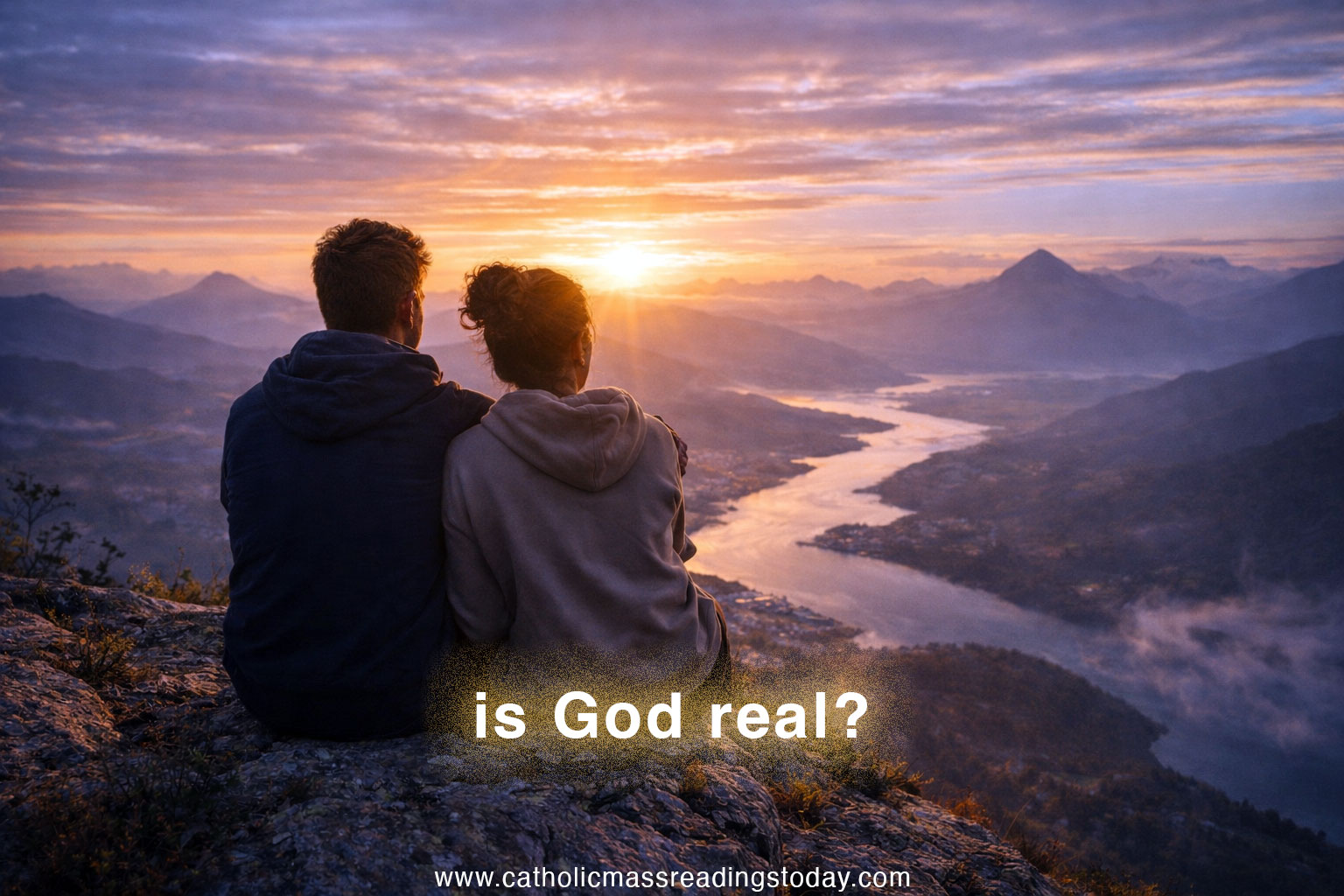
The question “Is God real?” is one of the most asked, most searched, and most profound questions in the world. It is a question that strikes curiosity, doubt, and sometimes fear.
Whether you are a young person exploring life, someone who has drifted from faith, or a practicing Catholic struggling to trust God, this question matters. And the Catholic Church has both faith and reason to guide us through it.
1. Understanding the Question: “Is God Real?”
When people ask “Is God real?”, they often mean:
- Does God exist at all?
- Can we know Him?
- Can we see or touch Him?
Science can explain much of our world, how the stars form, how life evolves, how the body works but it cannot fully explain the existence of love, beauty, truth, or consciousness. These realities point to a source beyond the material world: God.
The Catechism of the Catholic Church teaches:
“God, infinitely perfect and blessed in himself, in a plan of sheer goodness freely created man to make him share in his own blessed life.” (Paragraph 1 of the Catechism of the Catholic Church [CCC1])
God is not a distant idea; He is a personal, living being who desires a relationship with each of us.
2. Examples of God’s Reality Beyond Science
Some things in life cannot be measured, yet they are undeniably real:
a. Love and Conscience
Science can describe brain chemistry, but it cannot explain why we feel love that sacrifices, forgives, or transforms us. Why does a mother risk her life for her child? Why do we feel guilt when we do wrong, even if no one is watching? These realities point to a moral lawgiver – God.
b. Beauty and Awe
The human heart responds to beauty in ways that are deeply spiritual. The sunset, music, art, or a simple act of kindness can move us beyond explanation. St. Augustine once said:
“You have made us for Yourself, O Lord, and our hearts are restless until they rest in You.”
Beauty draws the soul toward the divine.
c. Miracles and the Extraordinary
Throughout history, countless events point to God’s action in the world. From the miracles of Lourdes and Fatima to personal experiences of healing or protection, these cannot always be explained scientifically. They show a loving God who intervenes in human life.
d. Faith in the Heart
Even for non believers, the very search for meaning, the longing to ask “Why am I here?” or “Does life have purpose?” is proof of God’s imprint in every human soul. Science can describe the universe, but it cannot answer why it exists at all.
3. God’s Reality for Catholics
For Catholics, God is not abstract. He is known personally through Jesus Christ. The Gospels show us a God who:
- Walks with the poor and suffering
- Forgives sins and restores hope
- Raises the dead and transforms hearts
The Eucharist – the very heart of Catholic worship – is a tangible sign of God’s presence. Catholics believe in a God who is living, real, and actively present in the world and in the lives of believers.
4. For Youth and Seekers Who Doubt
If you are asking “Is God real?” you are not alone. Many young people and adults wrestle with this question. Faith is not blind belief; it is a journey. You may not have all the answers now, but you can start with:
- Prayer and Silence – Speak to God honestly, even if you doubt He exists.
- Explore Scripture – The Bible shows God interacting with real people across history.
- Look for Evidence in Life – Notice moments of love, courage, forgiveness, and beauty. They point to God’s reality.
- Seek Community – Being part of a parish or youth group helps you encounter God through others.
5. Affirmation for Catholics Struggling with Faith
Even if your belief feels weak, remember: faith is not the absence of doubt, but the choice to trust God through doubt.
Jesus said:
“Blessed are those who have not seen and yet believe.” (John 20:29)
God is real – not because everything can be scientifically explained, but because He acts, loves, and calls each of us personally. Your doubt does not make Him less real; it can lead you closer to the truth.
6. Simple Truths that Point to God
To summarize, some simple realities of life remind us that God is real:
- Life itself: the universe, nature, and consciousness.
- Love: selfless acts that cannot be fully explained.
- Morality: the universal sense of right and wrong.
- Beauty: moments that move the heart beyond logic.
- Prayer: a personal experience of God’s presence.
When you combine these realities with the teachings of Jesus and the witness of the Church, the question “Is God real?” is met with both reason and hope.
7. Yes – God is real
“Is God real?” Yes – in every heartbeat, in every act of love, in every miracle, and in every longing for meaning. He is real for the young exploring life, for seekers who doubt, and for believers whose faith may waver. God is not a distant theory, He is a living presence, infinitely personal and infinitely good.
As Catholics, we are called to see Him, trust Him, and walk with Him daily. And for those searching, know this: God is already reaching out to you, even before you believe.