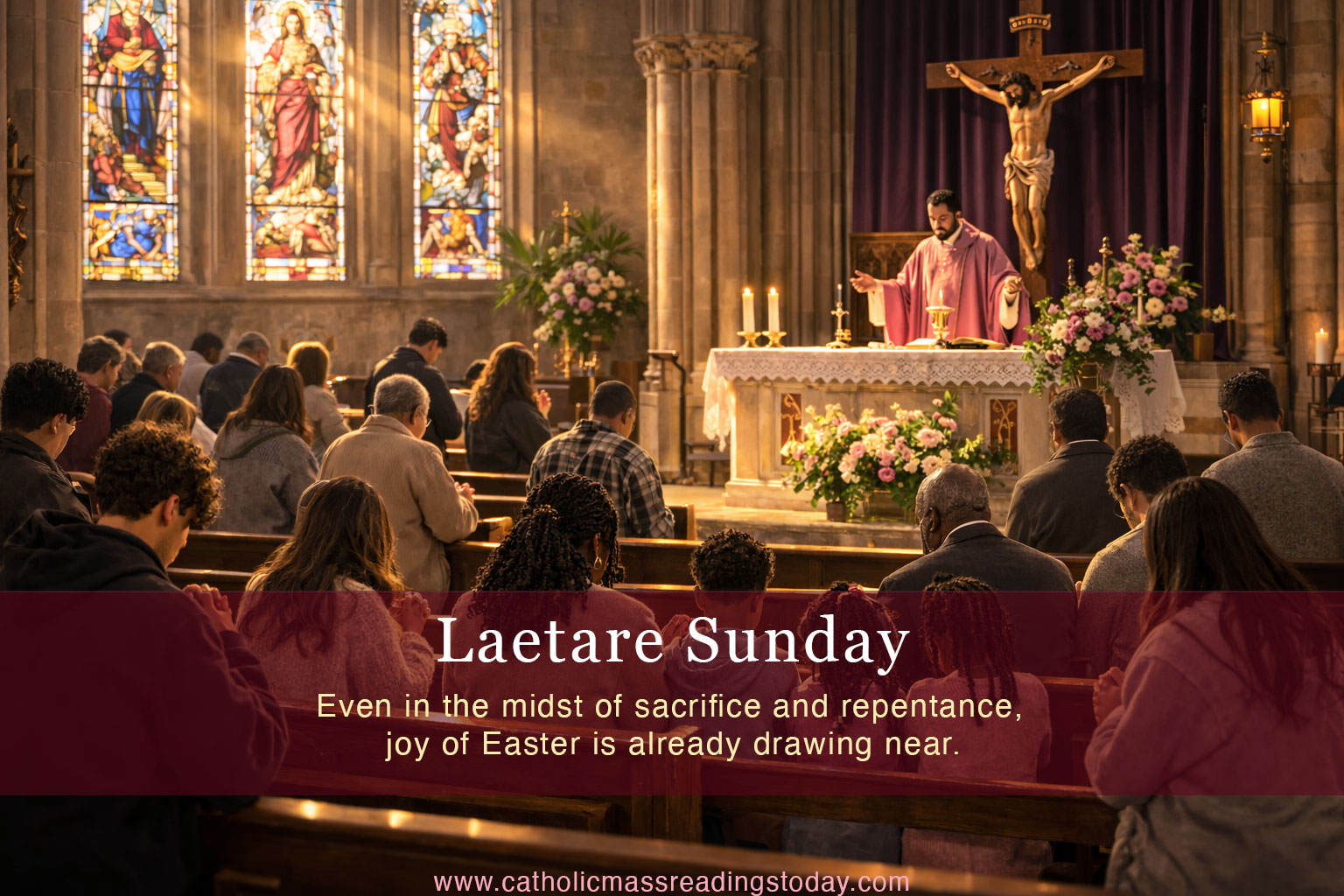
Every year during the season of Lent, the Catholic Church pauses for a moment of joy in the middle of a time normally marked by penance and reflection. This special day is known as Laetare Sunday. For Catholics around the world, Laetare Sunday serves as a reminder that even in the midst of sacrifice and repentance, the joy of Easter is already drawing near.
Understanding Laetare Sunday helps us appreciate the deep spiritual rhythm of the Church’s liturgical year. It reveals how the Church balances penance with hope, and discipline with joy. This unique Sunday invites us to lift our eyes toward the coming celebration of the Resurrection of our Lord Jesus Christ.
What Is Laetare Sunday?
Laetare Sunday is celebrated on the Fourth Sunday of Lent in the Catholic Church. The name comes from the first word of the Entrance Antiphon for the Mass of that day, taken from the Latin translation of Isaiah 66:10:
Laetare, Jerusalem: et conventum facite omnes qui diligitis eam.
“Rejoice, Jerusalem, and gather together all you who love her.”
The word “Laetare” means “Rejoice.”
This call to rejoice may seem surprising during Lent, a season traditionally associated with fasting, prayer, repentance, and reflection. Yet the Church intentionally inserts this moment of joy as a reminder that the sorrow of the Cross leads to the glory of the Resurrection.
Laetare Sunday is sometimes referred to as “Lent’s midpoint of joy” because it occurs roughly halfway through the Lenten season.
The Origins of Laetare Sunday
The roots of Laetare Sunday stretch back many centuries in the history of the Catholic Church.
The celebration began in Rome during the early Middle Ages, when the Fourth Sunday of Lent became associated with pilgrimage to the Basilica of the Holy Cross in Jerusalem. This church housed relics connected to Christ’s Passion, including fragments believed to be from the True Cross.
Christians would gather there to pray and reflect on the approaching mystery of the Passion and Resurrection of Jesus. Despite the solemn nature of Lent, the Church encouraged the faithful to take heart. Easter was drawing closer.
During this time, the liturgy began to adopt a more joyful tone on this Sunday. Certain Lenten restrictions were slightly relaxed. Music returned more fully to the liturgy, and the vestments worn by priests changed in color.
Over time, these practices became firmly established in the Roman liturgical tradition and eventually spread throughout the universal Church.
Why the Church Celebrates Laetare Sunday
The celebration of Laetare Sunday reflects a deeply human and spiritual wisdom.
Lent is a demanding season. For forty days, Catholics focus on prayer, fasting, repentance, and self denial. These practices help us detach from sin and grow closer to God.
Yet the Church understands that the Christian life is not only about sacrifice but also about hope and joy.
Laetare Sunday serves several important spiritual purposes:
1. A Reminder That Easter Is Near
The Church reminds us that the journey of Lent leads to the joy of Easter. The Resurrection of Christ stands at the center of Christian faith. Laetare Sunday lifts our hearts by pointing toward that coming celebration.
2. Encouragement for the Lenten Journey
By the fourth week of Lent, many of us may begin to feel the weight of our sacrifices. Laetare Sunday offers encouragement to continue the journey faithfully. It assures us that our efforts are not in vain.
3. A Reflection of Christian Hope
Christian life is always lived between suffering and hope. Even in moments of penance, the light of Christ never disappears. Laetare Sunday symbolizes this balance by blending Lenten discipline with Easter joy.
The Unique Liturgical Signs of Laetare Sunday
The Church expresses the spirit of Laetare Sunday through several visible changes in the liturgy.
Rose Colored Vestments
One of the most recognizable signs of Laetare Sunday is the use of rose colored vestments by the priest.
Normally during Lent, priests wear purple vestments, symbolizing penance and preparation. On Laetare Sunday, the purple may be replaced with rose colored vestments.
The rose color represents a softening of the penitential tone of Lent. It reflects joy breaking through the season of repentance.
This same custom also appears during Gaudete Sunday in Advent, another moment of joy within a season of preparation.
Flowers on the Altar
During most of Lent, churches traditionally avoid decorating the altar with flowers. On Laetare Sunday, however, flowers may return to the sanctuary as a sign of rejoicing.
Organ and Music
Music during Lent is usually more restrained. On Laetare Sunday, musical instruments may be used more freely, adding to the celebratory atmosphere of the liturgy.
The Gospel Themes of Laetare Sunday
The Gospel readings for Laetare Sunday often focus on themes of light, healing, mercy, and new life.
In many years, the Gospel reading comes from John 9, where Jesus heals the man born blind. In this story, Christ reveals Himself as the Light of the World.
The healing of the blind man becomes a symbol of spiritual sight. Just as Jesus restores physical vision, He also opens the eyes of the human heart.
This message fits perfectly with the meaning of Laetare Sunday. The faithful are reminded that Christ’s light is already breaking through the darkness of sin.
Historical Traditions Associated With Laetare Sunday
Over the centuries, several cultural traditions developed around Laetare Sunday.
Mothering Sunday
In England and parts of Europe, Laetare Sunday became known as Mothering Sunday.
Historically, people would return to their “mother church” the cathedral or parish where they had been baptized. Over time, this tradition evolved into a day when children honored their mothers.
Today, Mother’s Day in the United Kingdom traces its origins to this Laetare Sunday custom.
The Golden Rose
Another historic tradition connected with Laetare Sunday is the Golden Rose.
Beginning in the Middle Ages, the Pope would bless a golden rose on Laetare Sunday. This rose symbolized Christ’s resurrection and the joy of salvation. The Pope would then present it to a Catholic monarch, church, or shrine as a special sign of honor.
The Spiritual Meaning of Laetare Sunday Today
For Catholics today, Laetare Sunday remains an important moment of spiritual reflection.
It reminds us that the Christian journey always moves from darkness to light. Lent leads to Easter. The Cross leads to Resurrection.
Many people experience spiritual struggles during Lent. They may face temptation, fatigue, or discouragement in their efforts to pray more deeply and grow closer to God.
Laetare Sunday gently lifts the spirit and invites the faithful to continue walking with Christ.
The message is simple but powerful:
Do not lose heart. The joy of Easter is coming.
How Catholics Can Celebrate Laetare Sunday
Catholics can observe Laetare Sunday in several meaningful ways.
Attend Mass With Renewed Joy
Participating in the Mass of Laetare Sunday allows believers to experience the liturgical beauty of this day and reflect on the hope that Easter brings.
Reflect on the Resurrection
Laetare Sunday invites believers to meditate on the Resurrection of Christ, even while Lent continues.
Renew Lenten Commitments
The midpoint of Lent is a good time to reflect on personal Lenten practices. Some may choose to strengthen their commitment to prayer, fasting, or acts of charity.
Practice Christian Joy
True Christian joy does not ignore suffering but finds hope within it. Laetare Sunday encourages believers to share that joy with others through kindness, encouragement, and generosity.
Laetare Sunday and the Journey Toward Easter
As Lent continues beyond Laetare Sunday, the Church gradually turns its focus more directly toward the Passion of Christ.
Holy Week will soon arrive, bringing the solemn remembrance of Christ’s suffering and death. Yet Laetare Sunday reminds us that the story does not end at the Cross.
The Resurrection awaits.
This moment of joy in the middle of Lent prepares the faithful to face the coming days with renewed faith and hope.
Final Reflection
Laetare Sunday stands as a beautiful reminder that the Christian life always holds both sacrifice and joy.
Even in seasons of repentance and struggle, God’s promise of salvation shines through. The Church pauses during Lent to remind her children that the path they walk leads to life.
As the Entrance Antiphon proclaims:
“Rejoice, Jerusalem.”
The joy of Easter is already on the horizon.