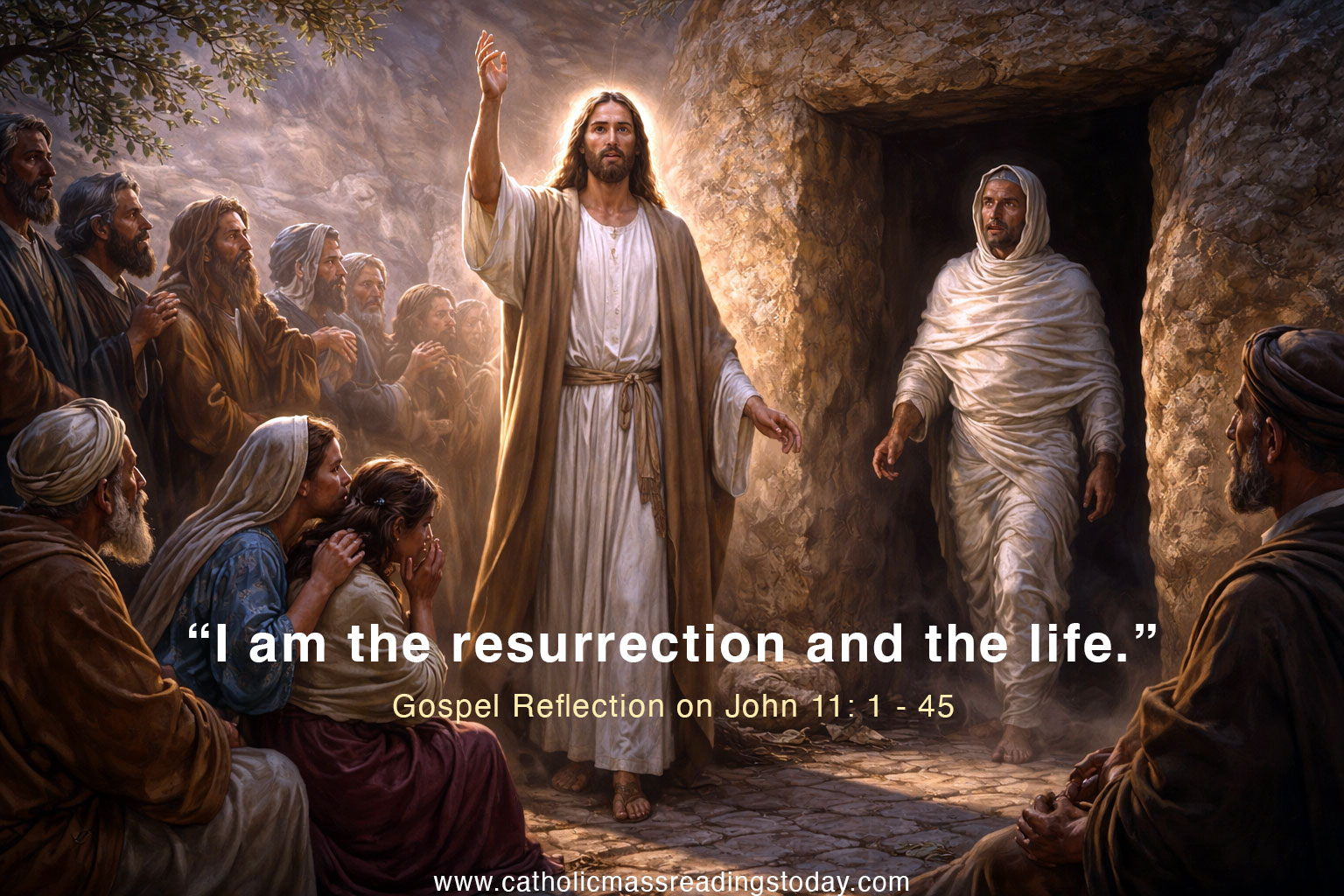
There is something deeply human about this Gospel. It doesn’t rush past pain or pretend that faith removes suffering. Instead, it brings us right into it.
Lazarus is sick, His sisters, Mary and Martha, do what any of us would do. They reach out to Jesus believing in Him, trusting in Him, and yet Jesus does not come immediately. That part is hard to accept. If we are honest, many of us have lived that exact moment. We pray, we believe, we call on God and still, the situation seems to get worse to our eyes. In this Gospel, Lazarus doesn’t just remain sick, He dies.
And when Jesus finally arrives, the first thing He meets is not praise but grief, disappointment, even a quiet question: “Lord, if you had been here…” That sentence carries so much weight. It is the voice of a broken heart. It is the same voice people carry today in hospitals, in financial struggles, in broken relationships, in moments where life feels unfair.
What stands out is that Jesus does not rebuke them for feeling this way. He does not say, “Why didn’t you trust me more?” Instead, He enters into their pain. The shortest and most powerful line in this Gospel is simply: “Jesus wept.”
This is the heart of our faith, we do not believe in a distant God. We believe in a God who stands with us in our sorrow. A God who feels what we feel. Before He performs the miracle, He shares in their grief.
But the story does not end in tears.
Jesus leads them to the tomb asking for the stone to be removed. Even then, Martha hesitates because from a human point of view, it is too late. The situation is beyond fixing. And that is exactly where Jesus speaks one of the most powerful truths of our faith:
“I am the resurrection and the life.”
Not “I will be.” Not “I can bring.”
“I AM.”
This is not just about Lazarus. This is about every situation that feels dead in our lives today. Some people are carrying dreams that have died. Others are dealing with relationships that seem beyond repair. Some are struggling with sin they feel they cannot overcome. And many are quietly dealing with burdens no one else sees.
This Gospel reminds us that Jesus does not only act when things look possible. He works even when everything looks finished.
When He calls out, “Lazarus, come out,” it is more than a miracle, it is a revelation. His voice brings life where there was death. And that same voice still speaks today.
But notice something important. After Lazarus comes out, Jesus tells the people around him, “Unbind him, and let him go.”
God brings life, but He also calls us as a community to help each other live in that freedom. We are not meant to walk this journey alone. In today’s world, where many feel isolated, judged, or forgotten, this part matters deeply. We are called to be part of each other’s healing.
As we move through this Lenten season, especially now when we are drawing closer to Easter, this Gospel invites us to ask one honest question:
Where in my life do I need to let Jesus speak life again?
Maybe it’s in your faith. Maybe it’s in your family. Maybe it’s in something you’ve already given up on.
Lent is not just about sacrifice, it’s about making space for resurrection.
And the same Jesus who stood before the tomb of Lazarus still stands before us today, looking at the places we think are beyond hope, and gently reminding us:
It is not over.