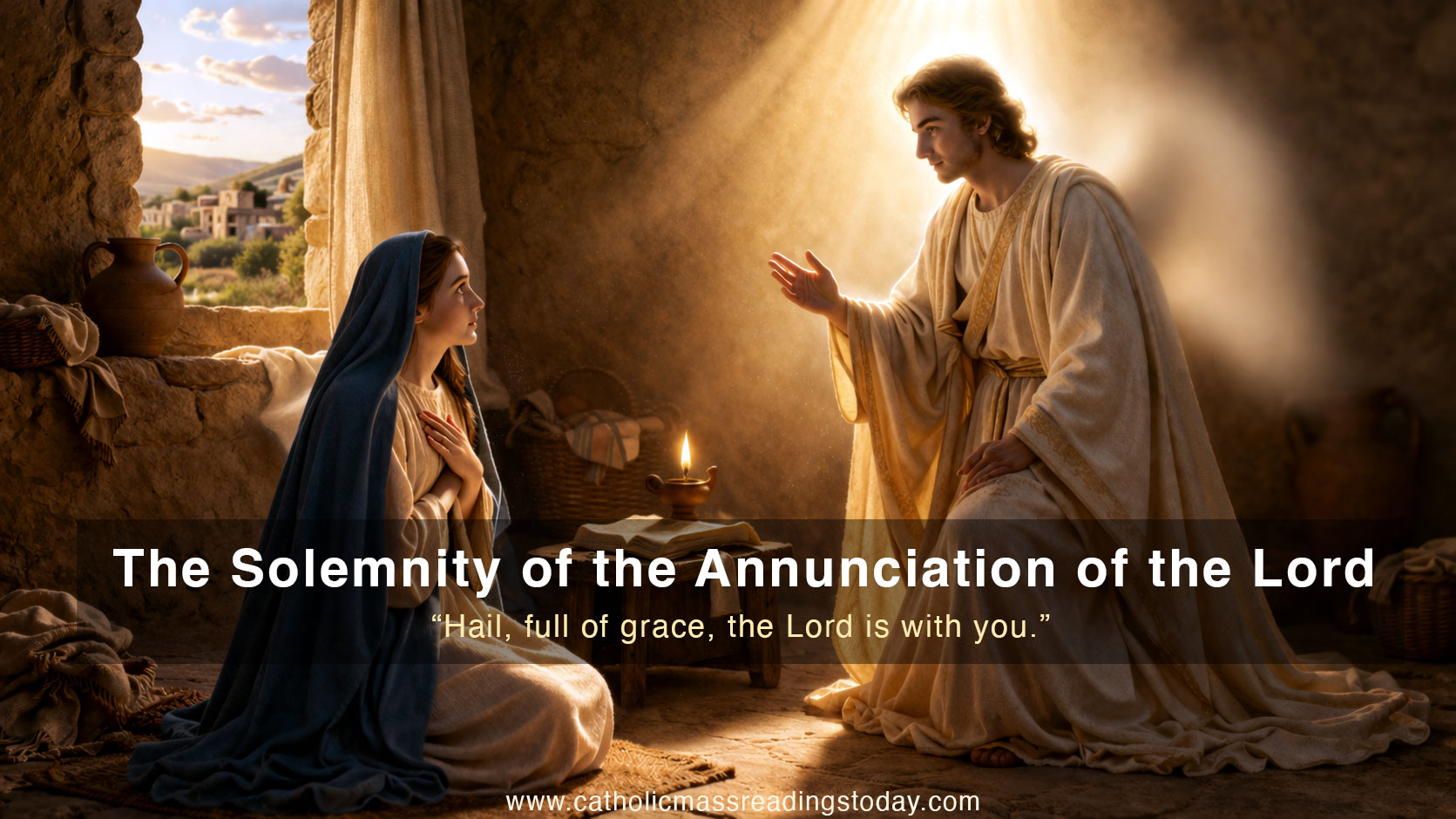
The Solemnity of the Annunciation of the Lord is one of the most profound and beautiful celebrations in the Catholic Church. It marks the moment when the angel Gabriel announced to the Virgin Mary that she would conceive and bear Jesus Christ, the Son of God. This feast is not just about a message delivered, it is about a moment that changed the entire course of human history. It is the beginning of our salvation, the moment when God became man in the womb of Mary.
Celebrated on March 25th, exactly nine months before Christmas the birth of Jesus. The Solemnity of the Annunciation of the Lord reminds us that before the birth of Christ, there was a “yes.” A quiet, humble, yet powerful “yes” from Mary that allowed God’s plan of salvation to unfold. In that moment, heaven touched earth in a way it never had before.
The Gospel at the Heart of the Annunciation
The foundation of the Solemnity of the Annunciation of the Lord comes from the Gospel of Luke (1:26–38). The angel Gabriel appears to Mary with a greeting that reveals her unique role: “Hail, full of grace, the Lord is with you.” These words are not ordinary, they show that Mary has been chosen and prepared by God for a special mission.
Mary is initially troubled and confused, which makes her response deeply relatable. She does not fully understand how this will happen, yet she listens, reflects, and asks a sincere question: “How will this be?” The angel’s answer reveals the mystery of the Incarnation. The Holy Spirit will come upon her, and the child will be the Son of God.
What follows is one of the most important responses ever spoken by a human being:
“Behold, I am the handmaid of the Lord; let it be to me according to your word.”
This moment is what the Church celebrates in the Solemnity of the Annunciation of the Lord Mary’s free and faithful consent to God’s will.
The Meaning of the Solemnity of the Annunciation of the Lord
At its core, the Solemnity of the Annunciation of the Lord is about the mystery of the Incarnation, God becoming man. It is the moment when Jesus Christ, fully divine and fully human, entered the world in the most humble way possible.
This solemnity teaches us several important truths:
- God takes the initiative: Salvation begins with God reaching out to humanity.
- Human cooperation matters: Mary’s “yes” shows that God invites us to participate in His plan.
- Grace transforms ordinary lives: Mary was a simple young woman, yet through her openness, she became the Mother of God.
The Annunciation reminds us that God often works in quiet, hidden ways, not always through grand or dramatic events, but through simple acts of faith and trust.
Mary’s “Yes” and What It Means for Us Today
The Solemnity of the Annunciation of the Lord is not only about Mary but also about us. Her response becomes a model for how we are called to live our own faith.
In today’s world, saying “yes” to God is not always easy. We live in a time filled with uncertainty, pressure, and constant distractions. Many people struggle with fear about the future, financial burdens, relationships, and personal challenges that are not always visible to others.
Like Mary, we often find ourselves asking, “How will this be?” when faced with situations we don’t understand.
But Mary shows us that faith is not about having all the answers, it is about trusting God even when we don’t.
Her “yes” invites us to reflect:
- Are we open to God’s will in our lives?
- Do we trust Him even when things are unclear?
- Are we willing to surrender our plans for something greater?
The Annunciation in the Life of the Church
The Solemnity of the Annunciation of the Lord is a major feast in the liturgical calendar. It is celebrated as a solemnity, which means it holds a high level of importance in the Church.
This day is also closely connected to the sanctity of life. Since it marks the moment of Christ’s conception, it reminds us of the dignity and value of life from its very beginning. Many in the Church also observe it as a day of prayer for the unborn.
Liturgically, the Annunciation falls during Lent, which gives it an even deeper meaning. In the middle of a season focused on sacrifice and repentance, this solemnity brings a message of hope and new life. It reminds us that even in the midst of preparation and struggle, God is already at work bringing salvation into the world.
Lessons from the Solemnity of the Annunciation of the Lord
There are several powerful lessons we can take from the Solemnity of the Annunciation of the Lord:
1. Trust in God’s Plan
Mary did not fully understand what was being asked of her, yet she trusted God completely. We are called to do the same, especially when life feels uncertain.
2. Courage in the Face of Fear
The angel’s first words were, “Do not be afraid.” Fear is a natural part of life, but faith calls us to move forward despite it.
3. The Power of Humility
Mary’s greatness comes from her humility. She did not seek recognition, she simply desired to do God’s will.
4. God Works Through the Ordinary
The Annunciation did not happen in a palace or a public place, but in a simple home. God often works in the quiet, ordinary moments of our lives.
Why the Solemnity of the Annunciation of the Lord Matters Today
In a world that values control, certainty, and independence, the message of the Solemnity of the Annunciation of the Lord is both challenging and comforting.
It reminds us that:
- We are not alone, God is with us.
- Our lives have purpose even when we don’t fully see it.
- Saying “yes” to God can lead to something far greater than we imagine.
This solemnity invites us to slow down, listen, and open our hearts to God’s voice. It encourages us to trust that even in the unknown, God is working for our good.
Hope, faith, and divine love
The Solemnity of the Annunciation of the Lord is a celebration of hope, faith, and divine love. It marks the beginning of our redemption and reminds us of the power of a single “yes” given in trust.
Mary’s response continues to echo through time, inviting each of us to respond to God in our own lives with the same openness and courage.
As we reflect on this solemnity, may we find the strength to say, in our own way:
“Lord, let it be done to me according to your word.”