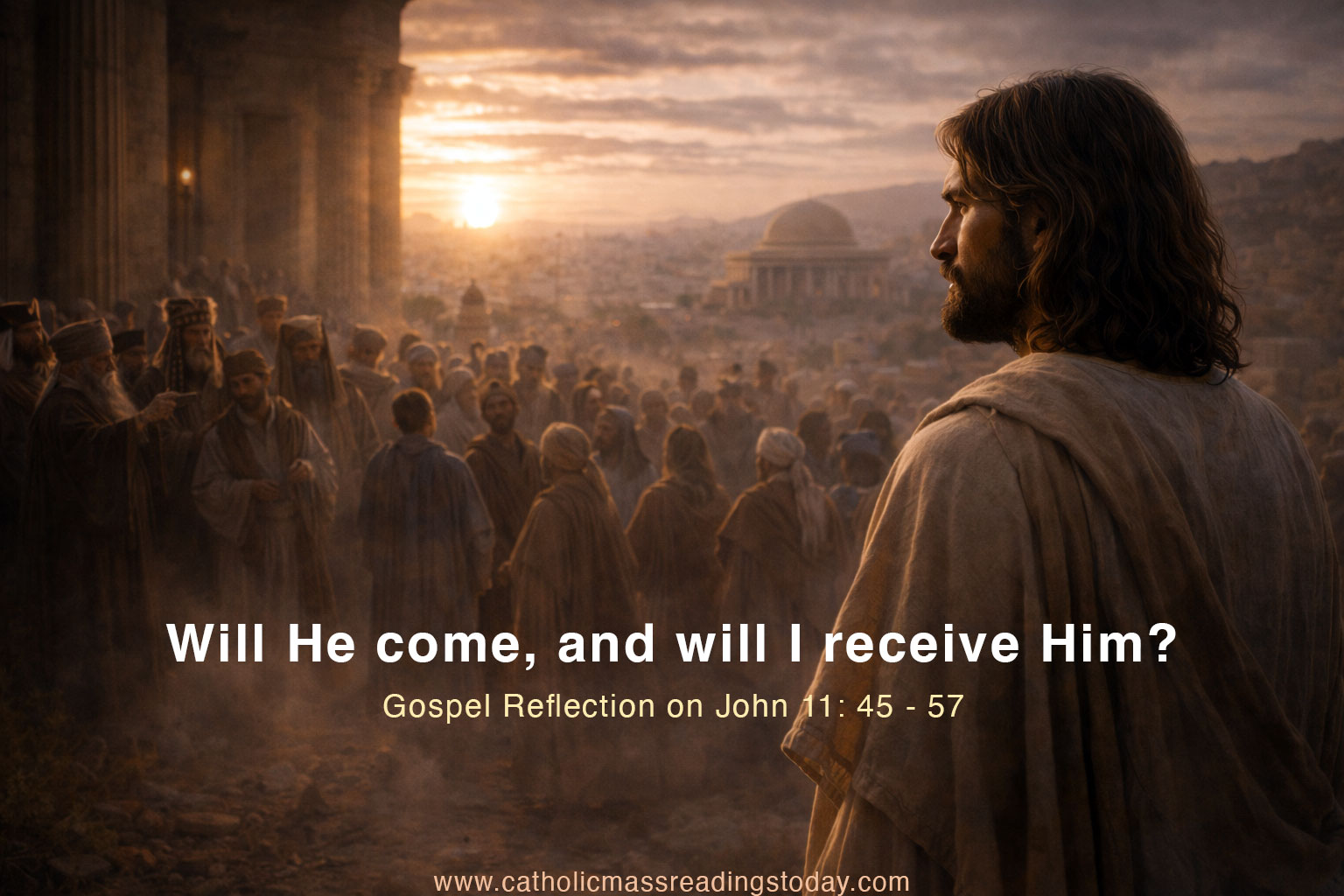
There’s something deeply human in this Gospel, and if we’re honest, a little uncomfortable too. You can almost feel the tension in the air. On one side, there are people who have just witnessed something incredible, Jesus raising Lazarus and they believe. On the other side, there are those who see the same thing and feel threatened. Not because it isn’t true, but because it disrupts everything they have built, everything they are used to, everything they think they can control.
The chief priests and Pharisees are not presented as cartoon villains here. They are worried. They are thinking politically, strategically. “What will happen to our nation? What will the Romans do?” In their minds, they are protecting something good. But somewhere along the way, fear begins to outweigh truth. And that’s where things start to go wrong. They would rather silence Jesus than face what His presence is asking of them.
And then Caiaphas speaks. What he says sounds cold, almost brutal “it is better that one man die for the people.” Yet in a strange and powerful way, God uses even that. What was meant as a political solution becomes a prophecy. Jesus will indeed die not just for one nation, but to gather into one all the scattered children of God. It’s a reminder that God can work even through human blindness, even through decisions made in fear.
As we stand on the edge of the Holy Week, this Gospel feels like a turning point. The decision has been made. The path to the Cross is no longer just a possibility it is set in motion. And Jesus knows it, that is why He withdraws for a time, not out of fear, but because His hour is approaching, and it will come in God’s time, not man’s.
There is also that quiet detail at the end, the people in the temple asking, “Will He come?” That question lingers. It’s not just theirs, it is ours too. Will He come into our lives, into our situations, into the places we try to keep hidden? And if He does, are we ready for what that means?
Looking at our world today, it’s not hard to see parallels. We live in a time where truth is often uncomfortable, where standing for what is right can come at a cost, and where fear of losing status, security, or control can lead people to make choices that go against what they know deep down is right. Even in our own personal lives, we sometimes resist God not because we don’t believe, but because following Him might require change, sacrifice, or letting go of something we’re holding onto.
Lent has been slowly leading us to this point. It has been a time of reflection, of stripping away distractions, of facing ourselves honestly before God. And now, as we move into Holy Week, the question becomes more personal: where do I stand in this story?
- Am I among those who believe when they see what God is doing?
- Am I among those who turn away because it’s inconvenient or challenging?
- Or am I somewhere in between, curious, searching, but not yet fully committed?
The beauty of this Gospel is that even in the midst of plotting and rejection, God’s plan is not shaken. In fact, it is unfolding. What looks like defeat is actually the beginning of salvation for all.
As we step into Holy Week, we are invited not just to observe these events, but to enter into them. To walk with Jesus. not only in His miracles, but also in His rejection, His silence, His suffering, and ultimately His victory.
And maybe, just maybe, to answer that question honestly within our own hearts:
Will He come, and will I receive Him?