
Celebrating 250 Years of the United States of America
On July 4, 2026, the United States reaches an extraordinary milestone 250 years since the signing of the Declaration of Independence. Known as the Semiquincentennial, this anniversary marks a quarter of a millennium since thirteen colonies declared that they were “Free and Independent States,” setting in motion one of history’s most influential experiments in democracy.
Across the nation, communities gather for parades, fireworks, concerts, historical reenactments, family picnics, and moments of remembrance. Yet beyond the celebrations lies an invitation to reflect on something deeper: the enduring values that have shaped the American story and the responsibility each generation bears to preserve them.
For Catholics, Independence Day is not only an occasion to celebrate the blessings of freedom. It is also a day to give thanks to God for His providence, to pray for the nation, and to recommit ourselves to building a society founded on justice, truth, compassion, and respect for the dignity of every human person.
A Nation Born on July 4, 1776
The story of American independence reached a defining moment on July 4, 1776, when the Second Continental Congress formally adopted the Declaration of Independence in Philadelphia.
Drafted primarily by Thomas Jefferson, with contributions from John Adams, Benjamin Franklin, Roger Sherman, and Robert R. Livingston, the Declaration announced to the world that the American colonies were no longer subject to British rule.
Its opening words continue to inspire people across the globe:
“We hold these truths to be self evident, that all men are created equal…”
Although the young nation would face enormous challenges in living out these ideals, the Declaration established principles that would influence democratic movements around the world for generations.
Today, 250 years later, Americans continue to reflect on the meaning of liberty, equality, justice, and the responsibilities that accompany freedom.
The Meaning of 250 Years
A nation’s history is measured not only by its achievements but also by its willingness to learn from its mistakes.
Over two and a half centuries, the United States has experienced seasons of remarkable progress alongside periods of profound struggle. It has endured wars, economic hardship, political divisions, natural disasters, and moments that tested its national identity.
Yet through each generation, countless ordinary men and women have worked to strengthen their communities, defend freedom, care for the vulnerable, advance scientific discovery, build institutions of education and healthcare, and promote the common good.
The 250th anniversary is therefore more than a birthday.
It is an opportunity to remember those whose sacrifices built the nation and to ask what kind of legacy today’s generation will leave for those who follow.
The Statue of Liberty: America’s Most Recognizable Symbol
No image captures the American ideal of freedom more powerfully than the Statue of Liberty.

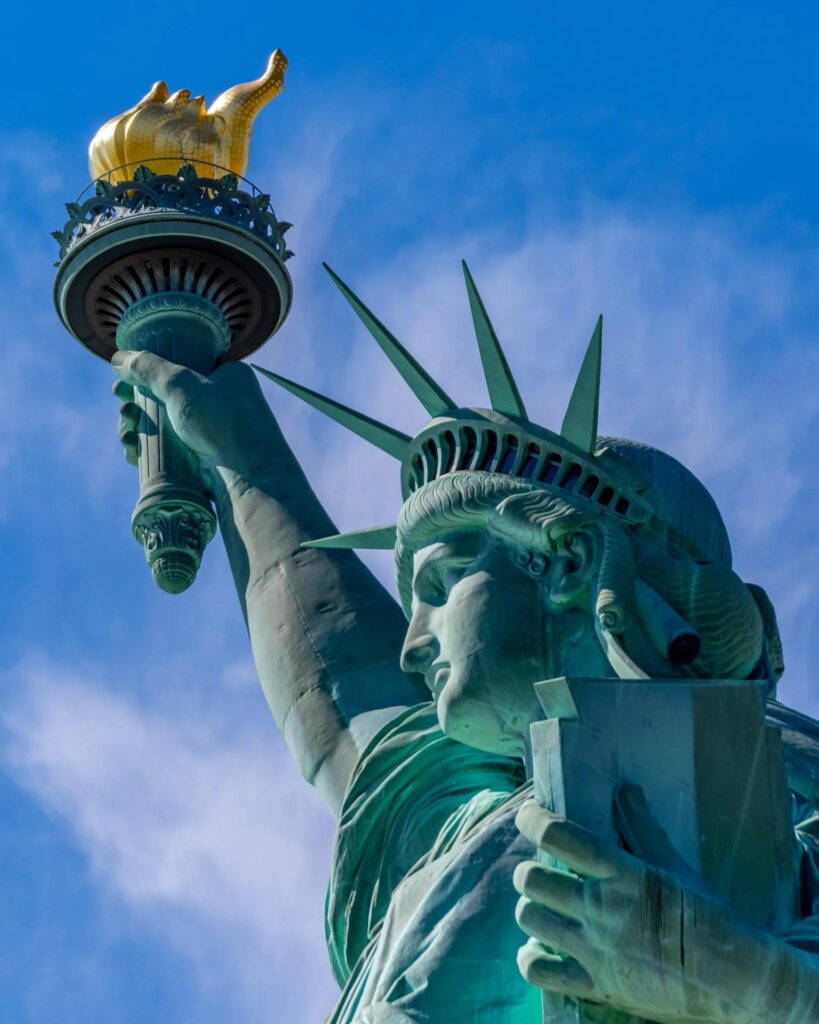

Standing proudly in New York Harbor, the Statue of Liberty has welcomed millions of immigrants arriving by sea, many of whom came seeking safety, opportunity, and the hope of building a better future.
Officially dedicated on October 28, 1886, the statue was a gift from the people of France, celebrating the enduring friendship between the two nations and their shared commitment to liberty.
Designed by Frédéric Auguste Bartholdi, with its internal structure engineered by Gustave Eiffel, the monument has become one of the most recognizable landmarks in the world.
Every element carries meaning:
- The torch symbolizes enlightenment and hope.
- The tablet bears the date July IV MDCCLXXVI (July 4, 1776).
- The broken chains at Liberty’s feet represent freedom from oppression.
- The seven rays of the crown symbolize liberty extending to every continent and every sea.
For generations of immigrants, the first glimpse of Lady Liberty represented the possibility of a new beginning.
Freedom and Responsibility
Freedom has always been one of the Church’s treasured values.
Yet Catholic teaching reminds us that authentic freedom is never simply the ability to do whatever we wish.
True freedom is the capacity to choose what is good.
As Saint John Paul II often taught, freedom reaches its fullness only when it is united with truth. A society flourishes not merely because its citizens possess rights, but because they also embrace their responsibilities toward one another.
This understanding gives Independence Day a deeper meaning.
The freedoms enjoyed today were purchased through sacrifice. They are preserved through honesty, service, justice, respect for human dignity, and a commitment to the common good.
A Day of Gratitude
For Catholics, national celebrations naturally become occasions for prayer.
We thank God for peace.
We pray for those who serve in public office.
We remember members of the armed forces, emergency responders, healthcare workers, teachers, parents, volunteers, and every citizen who quietly contributes to the life of the nation.
We also pray for healing where there is division, for wisdom where difficult decisions must be made, and for renewed commitment to the values that strengthen families and communities.
As America celebrates 250 years of independence, Catholics are invited to see this anniversary not simply as a remembrance of the past, but as a call to help shape a future rooted in justice, charity, and hope.
The story of the United States continues to be written, and every generation has the opportunity to leave it stronger than it found it.
Pope Leo XIV’s Message: Freedom Must Always Serve Truth, Justice, and Human Dignity
One of the most memorable moments of America’s 250th anniversary came not from a fireworks display or a public celebration, but from the heartfelt words of Pope Leo XIV, the first American-born Successor of Saint Peter.
In a special video message delivered as he received the Liberty Medal from the National Constitution Center in Philadelphia, Pope Leo invited Americans to look beyond the celebrations and rediscover the ideals that have guided the nation since its founding.
His message was neither political nor partisan. It was deeply pastoral, encouraging Americans to remember that true freedom is always inseparable from truth, justice, peace, and respect for every human person.
“As a Son of This Great Country…”
Pope Leo began with words that immediately resonated across the nation:
“As a son of this great country, founded by courageous men and women who dreamed of liberty and of a better life for themselves and for their children…”
Those words carried special significance.
For the first time in history, the Bishop of Rome spoke to America not only as the spiritual leader of the Catholic Church but also as someone born and raised in the United States.
His gratitude for the nation’s history was evident. Yet he also reminded Americans that anniversaries are not simply occasions to celebrate the past, they are opportunities to renew the values that shape the future.
Freedom Is More Than Independence
One of the central themes of Pope Leo’s message was the meaning of authentic freedom.
Political independence is a precious gift, but freedom reaches its fullest expression only when it is used to seek the good of others.
Throughout Catholic teaching, freedom is never understood as the ability to do whatever we desire. Rather, it is the God given capacity to choose what is true, good, and life giving.
This understanding echoes the words of Christ Himself:
“You will know the truth, and the truth will make you free.” (John 8:32)
Pope Leo encouraged Americans to continue building a society where liberty is accompanied by responsibility, where rights are balanced by concern for the common good, and where every person’s dignity is protected.
The Dignity of Every Human Person
A significant portion of the Holy Father’s message reflected on the sacred dignity of human life.
He reminded the nation that its greatness has always rested not merely upon economic prosperity or political influence, but upon its commitment to recognizing the inherent worth of every human person.
He spoke of protecting life from conception to natural death, defending freedom of conscience, safeguarding religious liberty, and ensuring that the weakest members of society are never forgotten.
These principles stand at the heart of Catholic Social Teaching.
A nation is measured not only by its wealth or achievements but also by how it treats the poor, the elderly, the unborn, the sick, refugees, immigrants, and all those whose voices are easily overlooked.
Remembering America’s Story of Welcome
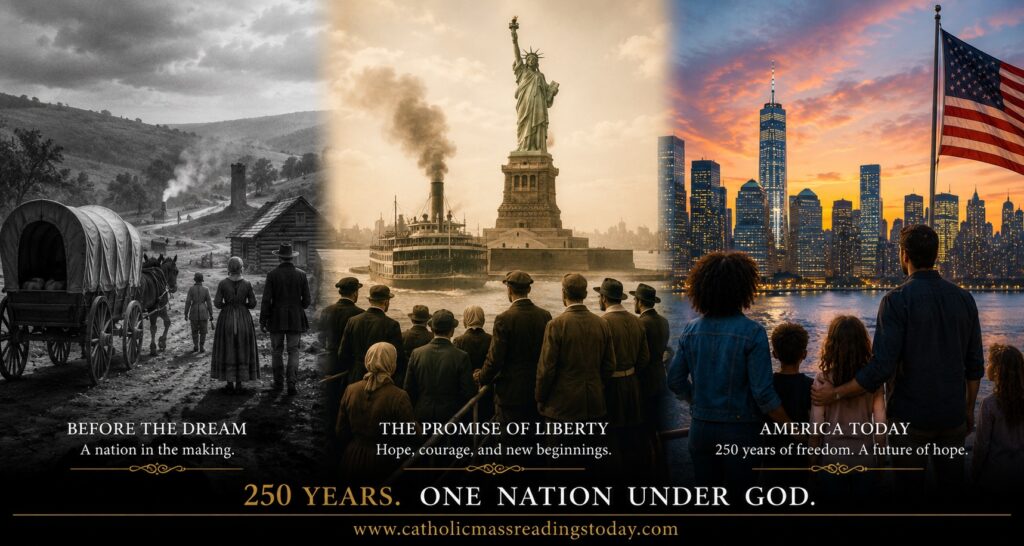
Another important theme in Pope Leo’s address was America’s long history as a nation shaped by immigrants.
He praised the generations of families who crossed oceans in search of freedom, opportunity, and a better future, recognizing that these countless journeys helped build the country into what it is today.
Without entering political debate, the Holy Father invited Americans to preserve the spirit of generosity that has long been part of the nation’s identity.
He reminded listeners that genuine patriotism is never rooted in fear of others but in confidence that justice, compassion, and truth strengthen rather than weaken a nation.
A Blessing for America’s Future
Pope Leo concluded with a heartfelt prayer that beautifully captured the spirit of the anniversary:
“I join you in asking God’s blessings upon America’s future, that the lofty ideals enshrined at the beginning of the Declaration of Independence may continue to guide the flourishing of the nation in unity, justice and peace.”
This blessing reaches beyond any single generation.
It is a prayer that America will continue striving toward the ideals that inspired its founders while remaining open to renewal, reconciliation, and hope.
A Message for Every Catholic
Pope Leo’s words are not addressed only to Americans.
They speak to Catholics throughout the world.
They remind us that patriotism and Christian discipleship are not opposing values. Love of country finds its highest expression when it is shaped by the Gospel through honesty, service, compassion, justice, respect for life, and concern for the common good.
Whether we live in the United States or elsewhere, we are called to become citizens who build bridges instead of walls, seek reconciliation instead of division, and allow Christ to guide every aspect of public and private life.
As America celebrates 250 years of independence, Pope Leo’s message offers a timely reminder that the greatest freedoms are those that lead us closer to God and inspire us to serve one another with generosity and love.
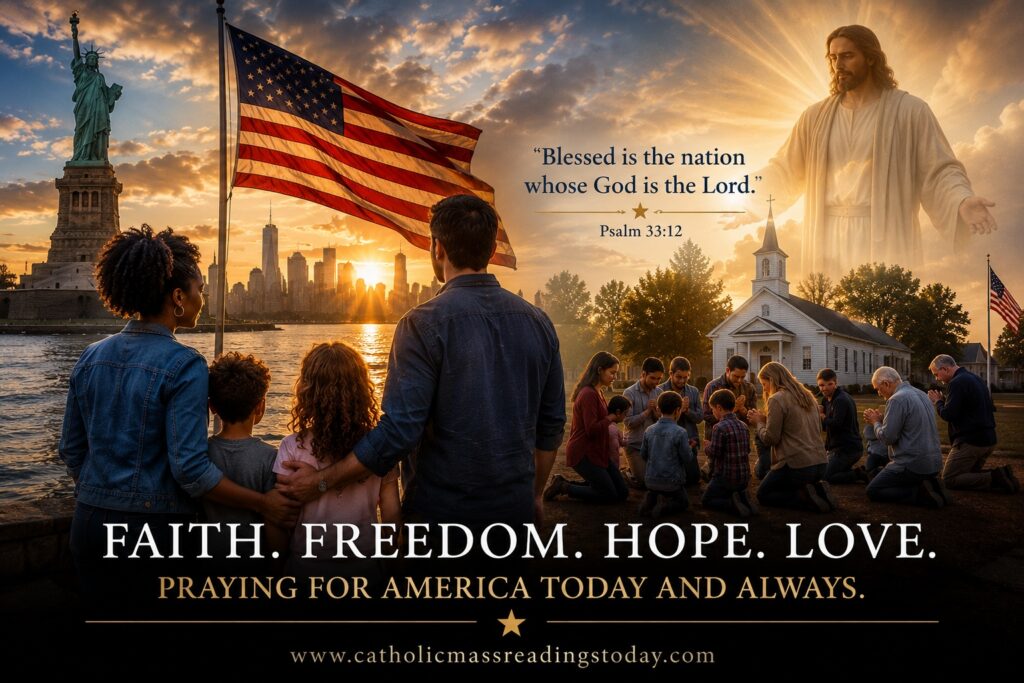
Faith, Patriotism, and the Future: A Prayer for America at 250
As the celebrations of America’s 250th Independence Day draw to a close, the fireworks will eventually fade, the parades will end, and the flags will be carefully folded away. Yet the deeper meaning of this historic anniversary remains.
Every generation inherits a nation shaped by those who came before it. The question each generation must answer is not simply how it will remember the past, but how it will shape the future.
For Catholics, patriotism has never meant placing love of country above love of God. Rather, it means loving our nation enough to desire what is truly good for it. Authentic patriotism seeks justice over self interest, truth over convenience, reconciliation over division, and service over personal gain.
The Church encourages Catholics to be grateful citizens, people who contribute to the common good through honesty, compassion, prayer, and faithful participation in society. Love for one’s country becomes most meaningful when it reflects Christ’s command to love our neighbour.
Freedom Is a Gift to Be Shared
The Declaration of Independence proclaimed humanity’s desire for liberty. The Gospel reveals why that liberty matters.
Christ came not only to free people from political oppression but to free every human heart from the power of sin, fear, hatred, and despair.
The freedom offered by Christ transforms every other freedom.
- It teaches us to forgive instead of seeking revenge.
- To defend the dignity of every person.
- To care for the poor.
- To protect the unborn.
- To welcome the lonely.
- To speak truth with charity.
- To work for peace even when disagreement seems easier.
The more a society embraces these values, the stronger and more compassionate it becomes.
What the Statue of Liberty Still Teaches the World
For nearly 140 years, the Statue of Liberty has stood watch over New York Harbor.
Millions have looked upon her torch with hope.
For some, she represented the promise of a new beginning.
For others, she symbolized the courage to leave behind hardship in search of opportunity.
Her message continues to speak today.
The torch reminds us that light is meant to be shared.
The broken chains remind us that freedom carries responsibility.
The date engraved upon her tablet reminds us that the ideals of liberty must be renewed by every generation.
For Christians, these symbols find their deepest meaning in Jesus Christ, who called Himself “the light of the world.” True freedom is ultimately found not in monuments or institutions alone, but in the One who sets hearts free and teaches us to love as He loves.
The Mission of Catholics in Today’s America
The Church does not ask Catholics to withdraw from society. She asks them to help transform it.
This begins in ordinary ways:
- Parents who teach their children to pray.
- Teachers who shape young minds with wisdom and integrity.
- Healthcare workers who treat every patient with compassion.
- Business leaders who act honestly.
- Public servants who seek justice rather than personal gain.
- Neighbours who care for one another.
- Parish communities that become places of welcome, healing, and hope.
These quiet acts of goodness rarely make headlines, yet they are the foundation upon which every healthy society is built.
As America begins its next chapter, the nation will need citizens whose character is shaped not only by patriotism but also by faith, humility, and a commitment to the common good.
Looking Toward the Next 250 Years
No one knows what America will look like another 250 years from now.
Technology will change, cities will grow and new challenges will emerge but the values that sustain a nation remain remarkably constant.
- Justice
- Truth
- Mercy
- Respect for human dignity
- Religious freedom
- Compassion for the vulnerable
- Commitment to peace
These are not merely political ideals. They are deeply biblical values that continue to guide Christians in every age.
If they are carefully preserved and faithfully lived, they will continue to inspire future generations just as they have inspired countless people over the past two and a half centuries.
A Prayer for America on Its 250th Anniversary
In the Name of the Father, and of the Son, and of the Holy Spirit. Amen.
Heavenly Father,
With grateful hearts we thank You for the blessings You have poured upon the United States of America throughout the past 250 years.
We thank You for the generations who worked with courage, sacrifice, and hope to build communities where freedom, opportunity, and justice could flourish.
Bless this nation once again.
Guide its leaders with wisdom, integrity, and humility.
Protect those who serve in the armed forces, law enforcement, emergency services, and every profession dedicated to the common good.
Strengthen families.
Comfort the poor.
Heal those who are suffering.
Welcome the stranger.
Bring peace where there is conflict, understanding where there is division, and hope where discouragement has taken root.
Help every citizen to use the gift of freedom wisely, always seeking what is true, just, and good.
May churches continue to proclaim the Gospel with courage, and may every Christian become a faithful witness to Your love through acts of mercy, compassion, and service.
As America begins its next chapter, may Your providence continue to guide this nation toward a future marked by justice, unity, and peace.
We entrust the United States of America to the protection of the Blessed Virgin Mary, under her title of the Immaculate Conception, Patroness of the United States.
May she intercede for all who call this nation home and lead every heart closer to her Son, Jesus Christ.
Through the same Christ our Lord.
Amen.
In the Name of the Father, and of the Son, and of the Holy Spirit. Amen.