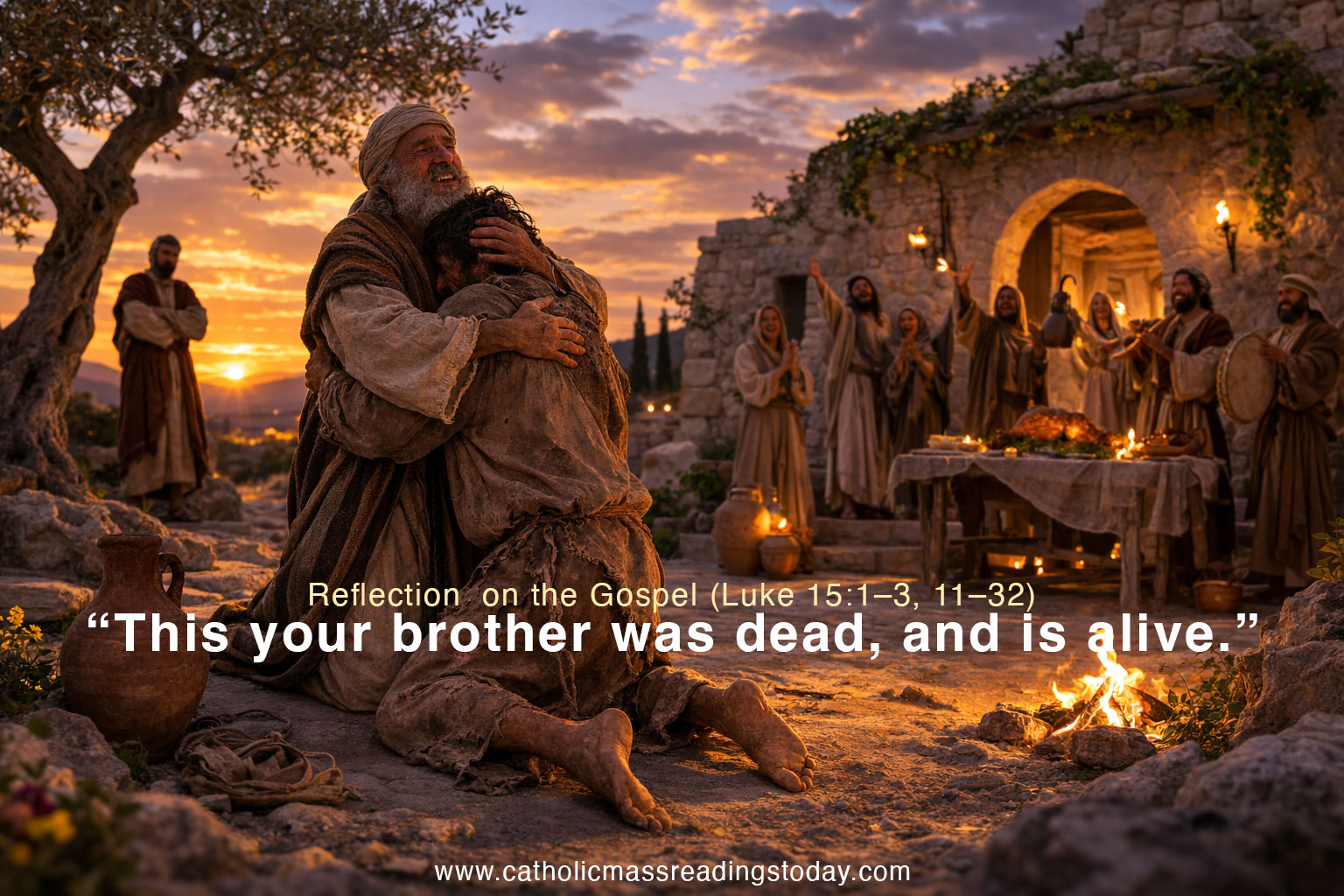
Second Week of Lent – The Parable of the Prodigal Son
The Gospel Luke 15:1–3, 11–32 we hear is one of the most beautiful and moving passages in all of Sacred Scripture. The parable of the Prodigal Son, sometimes also called the Parable of the Merciful Father, reveals to us the very heart of God. During this second week of Lent, when the Church invites us to deepen our conversion, this Gospel speaks directly to our lives, our struggles, and the world we live in today.
God’s heart revealed in the Father
At the center of this parable is the father, who represents God Himself. What strikes us immediately is the father’s reaction when his son returns. The son had demanded his inheritance, something that in that culture was deeply offensive, almost like saying to his father, “I wish you were dead.” Yet when the son returns in shame and poverty, the father does not scold him, question him, or punish him.
Instead, the Gospel says:
“While he was yet at a distance, his father saw him and had compassion, and ran and embraced him and kissed him.”
In Jewish culture, dignified men did not run. Yet the father runs. He does not wait for explanations or apologies. His love moves him first.
This is the image Jesus wants us to understand about God: God is not waiting to condemn us; He is waiting to welcome us home.
During Lent, the Church constantly reminds us of this truth. Lent is not primarily about punishment or guilt. It is about returning to the Father who longs for us.
The younger son: The story of human sin
The younger son represents all of us at different moments in life.
He wanted freedom without responsibility. He wanted the father’s gifts but not the father himself. He left home seeking pleasure, independence, and self-fulfillment. At first, it probably felt exciting the thought and experience of new places, new people, new experiences, but eventually everything collapsed.
The Gospel says famine came, and he was reduced to feeding pigs, an especially humiliating job for a Jew. He even wished to eat the food given to the pigs.
Sin often follows this same pattern in our lives today. At first it promises freedom and happiness. But eventually it leaves emptiness, loneliness, and spiritual hunger.
Look at the world around us today. Many people search for happiness in wealth, pleasure, fame, or power. Societies promote the idea that happiness comes from independence from God. Yet we see increasing loneliness, anxiety, division, and despair.
The younger son’s experience reflects what happens when humanity tries to live without God.
The moment of conversion
One of the most powerful lines in the Gospel is simple:
“He came to himself.”
Conversion begins when we finally see the truth about our lives. The younger son realizes that even the servants in his father’s house live better than he does.
Lent invites us into that same moment of reflection. Through prayer, fasting, and almsgiving, we examine our lives honestly.
Where have we wandered away from God?
Where have we chosen selfishness over love?
Where have we allowed pride, resentment, or indifference to take root in our hearts?
True repentance is not just feeling guilty. It is recognizing that life away from God cannot satisfy the human heart.
The journey home
The younger son makes a decision:
“I will arise and go to my father.”
Notice something important: he does not wait until everything is fixed. He does not wait until he becomes worthy again. He returns while still poor, still broken, still ashamed.
This is exactly how God invites us to return to Him.
Many people today stay away from the Church or the Sacraments because they feel unworthy. They believe they must first become perfect before approaching God.
But the Gospel teaches the opposite. We return to God precisely because we are broken.
That is why the Sacrament of Reconciliation is so important during Lent. Confession is the moment when we walk back toward the Father and discover that He is already running toward us.
The celebration of mercy
The father orders three things for the son:
- The best robe. Restoring his dignity
- A ring. A symbol of belonging to the family
- Sandals. Something servants did not wear
In other words, the father does not accept him back as a servant. He restores him as a son.
This reflects the grace God gives us through Christ. When we repent, God does not merely tolerate us. He restores our dignity as His children.
The killing of the fatted calf and the celebration remind us of the joy of heaven when a sinner repents. Jesus says elsewhere that there is more joy in heaven over one repentant sinner than over ninety nine righteous people who have no need of repentance.
The elder son: The hidden danger
The story does not end with the younger son. Jesus introduces another character: the elder brother.
He represents the Pharisees who criticized Jesus for welcoming sinners. But he also represents something that can happen in any believer’s heart.
The elder son had always obeyed his father, yet he was filled with anger and resentment when his brother returned.
His problem was not disobedience it was lack of love.
Sometimes those who are faithful in religious practice can become spiritually hardened. We may begin to judge others, thinking we are better than those who struggle.
The elder son could not rejoice in mercy because he believed everything had to be earned.
Yet the father says to him:
“Son, you are always with me, and all that is mine is yours.”
The father loves both sons. One needed forgiveness. The other needed conversion of heart.
A message for our world today
This Gospel speaks powerfully to the world we live in.
Today we see division everywhere, political conflicts, wars, broken families, social tensions, and deep mistrust among people. Many feel abandoned, forgotten, or spiritually lost.
This parable reminds us that God’s mercy is greater than human failure.
It also challenges us to become instruments of that mercy.
- When society rejects people, Christians are called to welcome them.
- When the world spreads anger and division, Christians are called to show forgiveness.
- When people feel lost, the Church must become a place where they experience the Father’s embrace.
The world does not need more judgment. It needs witnesses of mercy.
The invitation of lent
During this second week of Lent, the Gospel asks us a very personal question:
Which son are we today?
Are we like the younger son, needing to return to God after wandering away?
Or are we like the elder son, faithful in practice but struggling with pride, resentment, or lack of compassion?
Most of us, if we are honest, carry something of both sons within us.
Lent is the time when God invites us to come home again.
A final thought
The most striking detail in the entire parable is this: the father is always watching the road.
He sees the son “while he was still far off.” This means he had been looking for him, hoping for his return.
That is how God looks at each one of us.
No matter how far we have gone, no matter how long we have wandered, the Father is still watching the road.
And the moment we turn toward Him, even from a distance, He runs to meet us.
Let us Pray
Lord,
during this Lenten season help us recognize our need for Your mercy.
Give us the courage to return to You with humble hearts.
Remove any pride or hardness within us so that we may rejoice in Your forgiveness and extend that same mercy to others.
May we experience the joy of being welcomed again into the embrace of our loving Father.
Amen.