There are some words in the Gospel that are so familiar that we risk hearing them too quickly. Yet this passage remains one of the clearest windows into the heart of God: “God so loved the world that he gave his only-begotten Son.”
That is where everything begins, not with our worthiness, not with our effort, but with the love of God. The Father does not love the world from a distance. He gives. And what He gives is not something small, but His only begotten Son. Christianity is built on this astonishing truth: salvation is first a gift of divine love.
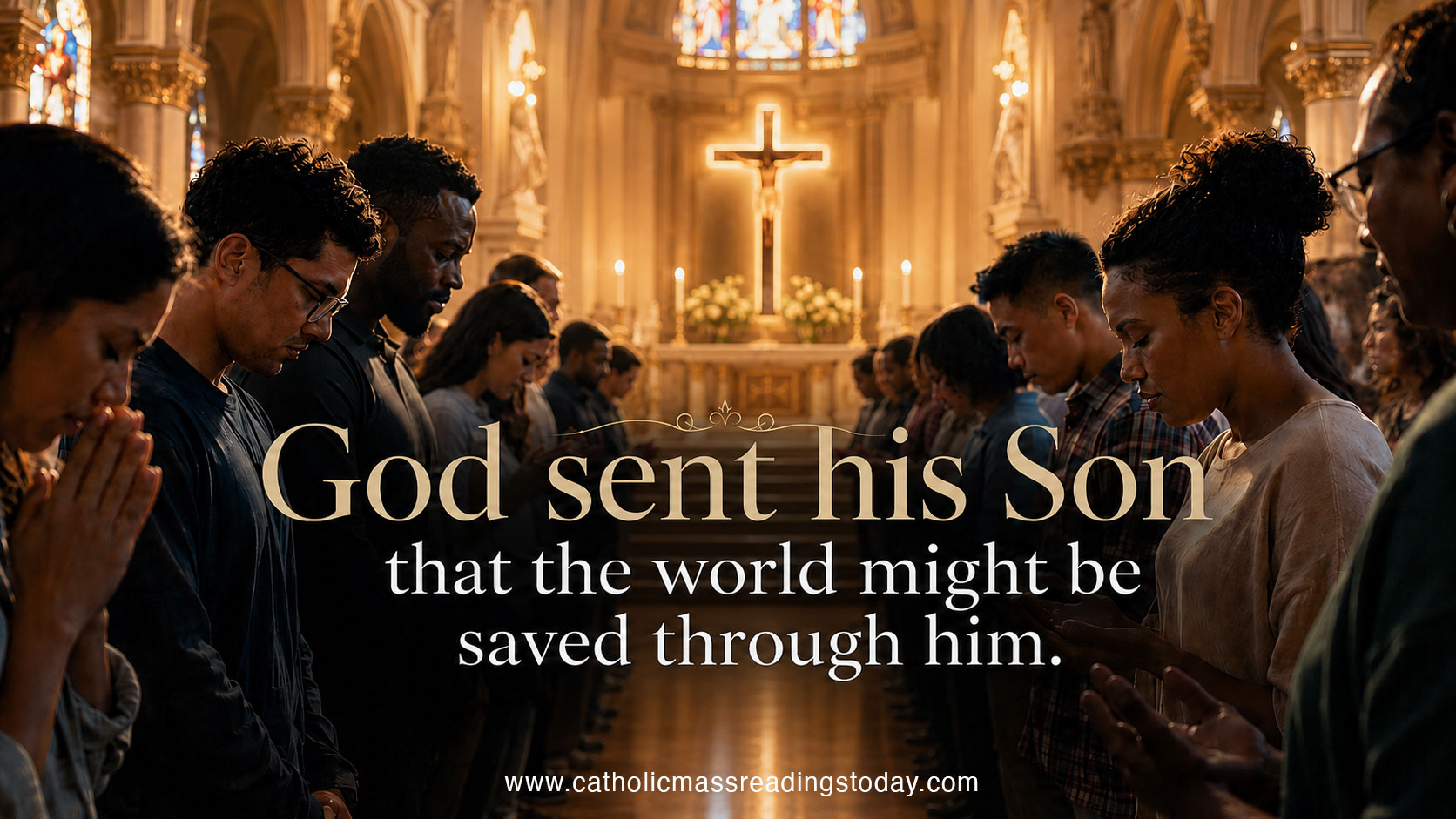
This matters deeply, because many hearts carry a false image of God. Some imagine Him as eager to condemn, quick to reject, or distant from human suffering. But Jesus says plainly: “God sent the Son into the world, not to condemn the world, but that the world might be saved through him.” These words should rest deeply within us. The mission of Christ is a mission of rescue, mercy, and life.
That does not mean sin is ignored. It means that God’s first movement toward the sinner is mercy. He comes not to destroy, but to save. He comes not to close the door, but to open it. He comes not to leave humanity in darkness, but to draw it back into life.
This is the great hope of the Gospel. We are not abandoned to ourselves. We are not left trapped in sin, fear, and death. In Christ, God has acted decisively for our salvation.
But the Gospel also speaks with seriousness. Jesus says that whoever believes in him is not condemned, while the one who refuses to believe remains under condemnation already. These are not easy words, but they are important. They remind us that faith is not a decorative part of Christian life. It is a real response to the gift God has offered. To believe in Christ is to entrust oneself to Him, to receive the salvation He brings, to step out of darkness and into His light.
In Catholic faith, belief is never merely intellectual agreement. It is personal surrender. It is to say: I place my life in Your hands. I trust who You are. I receive what You have come to give. Faith opens the heart to grace. Refusal closes the heart against the very mercy meant to save it.
So this Gospel holds together two things that must never be separated: the tenderness of God’s love and the seriousness of our response. God loves first. God gives first. God saves first. But the human heart must still answer.
And what is the answer the Gospel asks of us? Not fear, but trust. Not despair, but faith. Not hiding from Christ, but coming toward Him.
There is something deeply consoling in this. The Christian life is not built on trying to persuade God to love us. It is built on learning to live inside a love already given. The Father has already spoken through the gift of His Son. The question is whether we will receive Him.
This passage is therefore both invitation and promise. It invites us to believe more deeply, and it promises that whoever truly rests in Christ will not perish, but have eternal life. That is not a small hope. It is the greatest hope possible.
So perhaps the best way to receive this Gospel is with gratitude and renewed trust: to let these words become personal. God loved. God gave. God sent His Son. And in Christ, salvation is truly near.
Let us Pray
Lord Jesus Christ,
you are the gift of the Father’s love
for the life of the world.
Teach us to believe in You more deeply,
to trust in Your mercy more fully,
and to live each day in the light of Your saving love.
Deliver us from fear,
from hardness of heart,
and from every resistance to grace.
May we never forget
that You came not to condemn,
but to save.
Amen.