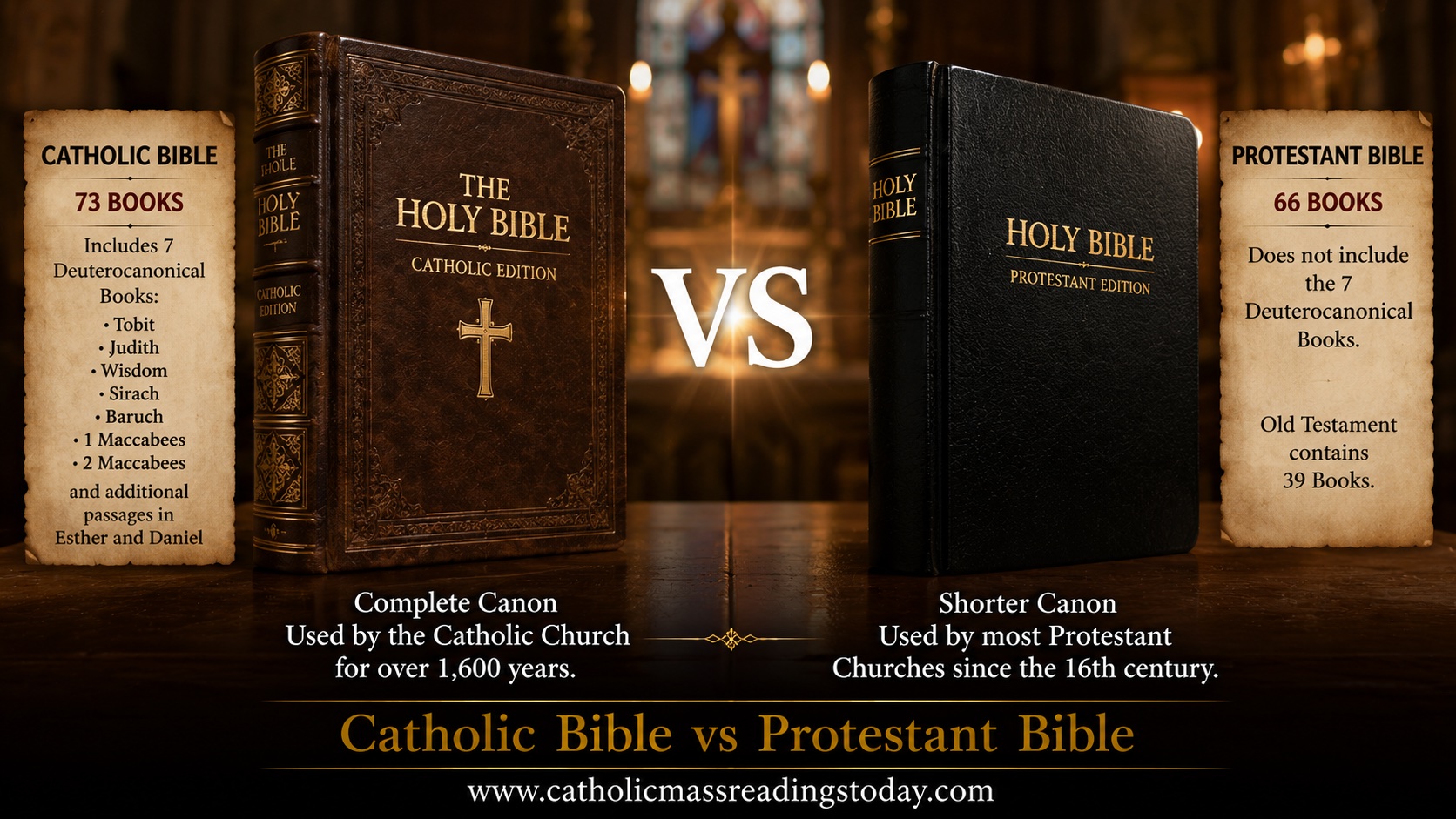
If you’ve ever compared a Catholic Bible with a Protestant Bible, you’ve probably noticed something surprising: they are not exactly the same. While both contain God’s inspired Word and proclaim the Gospel of Jesus Christ, they differ in the number of books they include and, in some cases, the way certain passages are translated or arranged. These differences have raised questions for centuries and continue to be a topic of interest for Christians around the world.
For Catholics, understanding these differences is not about proving one Bible “better” than another. Rather, it is about appreciating the history of Sacred Scripture, the role of the Church in preserving it, and the rich heritage that has been handed down from the Apostles.
This article explains the key differences between the Catholic and Protestant Bibles, how they came about, and why they matter today.
What Is the Difference Between the Catholic Bible and the Protestant Bible?
The most obvious difference is the number of books.
- The Catholic Bible contains 73 books.
- Most Protestant Bibles contain 66 books.
The Catholic Old Testament includes seven books that are not found in most Protestant Bibles.
These books are called the Deuterocanonical Books by Catholics.
Many Protestants refer to them as the Apocrypha.
The New Testament is identical in both traditions, containing the same 27 books.
How Many Books Are in Each Bible?
The Catholic Bible
The Catholic Bible contains:
- 46 books in the Old Testament
- 27 books in the New Testament
Total: 73 books
The Protestant Bible
The Protestant Bible contains:
- 39 books in the Old Testament
- 27 books in the New Testament
Total: 66 books
The difference lies entirely in the Old Testament.
Which Books Are Found Only in the Catholic Bible?
The Catholic Church includes these seven Deuterocanonical books:
- Tobit
- Judith
- Wisdom
- Sirach (Ecclesiasticus)
- Baruch
- 1 Maccabees
- 2 Maccabees
In addition, several sections appear in Catholic versions of:
- Esther
- Daniel
These passages include:
- The Prayer of Azariah
- The Song of the Three Young Men
- Susanna
- Bel and the Dragon
- Additional passages in Esther
These writings have been part of Catholic Scripture since the earliest centuries of Christianity.
Why Are These Books Missing From Protestant Bibles?
To answer this question, it is necessary to look at history.
The first Christians did not have a completed New Testament.
Instead, they relied primarily on the Old Testament in Greek, known as the Septuagint (LXX).
The Septuagint was widely used throughout the ancient Mediterranean world, including by many Jewish communities outside Palestine. It contained the Deuterocanonical books.
The New Testament writers frequently quoted from the Septuagint, and many of its wording choices appear throughout the Gospels and the letters of the Apostles.
For the early Church, this Greek collection formed the Scriptures that Christians read in worship.
The Canon of Scripture in the Early Church
As Christianity spread, the Church carefully discerned which books belonged to Sacred Scripture.
Several regional councils helped confirm the biblical canon, including:
- Council of Rome (AD 382)
- Council of Hippo (AD 393)
- Council of Carthage (AD 397)
- Council of Carthage (AD 419)
These councils listed the same 73 books that are found in Catholic Bibles today.
For over a thousand years, Christians throughout Western Europe generally used this biblical canon.
The Protestant Reformation
During the sixteenth century, the Protestant Reformation brought significant changes.
Some Reformers questioned the authority of the Deuterocanonical books because they were not included in the later Hebrew canon that became standard in Rabbinic Judaism after the time of Christ.
As a result, many Protestant editions placed these books in a separate section called the Apocrypha.
Over time, many Protestant publishers removed them entirely from ordinary Bible editions.
The Council of Trent
In response to the questions raised during the Reformation, the Catholic Church reaffirmed the traditional canon at the Council of Trent (1545 – 1563).
The Council did not add books to the Bible. Rather, it solemnly confirmed the canon that had already been received and used in the Church for centuries.
Since then, the Catholic Bible has continued to contain all 73 books.
What Does “Deuterocanonical” Mean?
The word Deuterocanonical means “belonging to the second canon.”
This does not mean the books are less inspired or less important.
Instead, the term reflects that these books were formally recognised after the protocanonical books during the Church’s historical process of discerning the biblical canon.
Catholics believe they are fully inspired by the Holy Spirit and are part of Sacred Scripture.
Do Catholics and Protestants Believe the Same Things About the Bible?
Catholics and Protestants share many important beliefs.
Both believe:
- The Bible is inspired by God.
- Scripture reveals God’s plan of salvation.
- Jesus Christ is the fulfilment of God’s promises.
- The Gospels faithfully proclaim the life, death, and Resurrection of Christ.
However, there are important differences in how Scripture is understood and interpreted.
The Catholic Understanding of Scripture
The Catholic Church teaches that Divine Revelation comes to us through:
- Sacred Scripture
- Sacred Tradition
Both flow from the same divine source and together form the one deposit of faith entrusted to the Church.
The Church also teaches that the Magisterium, the Pope together with the bishops in communion with him has the responsibility of authentically interpreting the Word of God.
This does not place the Church above Scripture. Rather, it serves Scripture by faithfully preserving and explaining its true meaning.
As the Catechism of the Catholic Church teaches:
“Sacred Tradition and Sacred Scripture make up a single sacred deposit of the Word of God.”
Why Are the Deuterocanonical Books Important?
These books provide valuable insight into the faith and life of God’s people before the coming of Christ.
They contain teachings about:
- prayer
- wisdom
- repentance
- God’s mercy
- hope in the resurrection
- fidelity during persecution
- intercession for the dead
For example:
The Book of Wisdom contains profound reflections that Christians have long understood as pointing toward Christ.
Sirach offers practical guidance for holy living.
The Books of Maccabees preserve the history of Jewish faithfulness during persecution and include passages that have contributed to Catholic understanding of prayer for the departed.
These writings enrich the Church’s understanding of salvation history.
Do These Differences Affect Christian Faith?
The central truths of Christianity remain shared across Catholic and Protestant traditions.
Both proclaim:
- the Trinity
- the Incarnation
- Christ’s saving Death and Resurrection
- the authority of Scripture
- the hope of eternal life
The differences concern the biblical canon and certain doctrines that developed alongside different approaches to Scripture and Tradition.
For Catholics, these distinctions highlight the importance of reading the Bible within the living tradition of the Church that preserved it.
Which Bible Should Catholics Read?
The Church encourages Catholics to read approved Catholic editions that include all 73 books and contain ecclesiastical approval, often indicated by the Nihil Obstat and Imprimatur.
Popular Catholic translations include:
- Revised Standard Version – Catholic Edition (RSV-CE)
- New American Bible Revised Edition (NABRE)
- Jerusalem Bible
- New Jerusalem Bible
- English Standard Version – Catholic Edition (ESV-CE)
- Good News Bible – Catholic Edition
These editions include the complete canon recognised by the Catholic Church.
Frequently Asked Questions
Did Catholics add seven books to the Bible?
No.
The Catholic Church did not add these books during the Council of Trent. Rather, Trent reaffirmed the canon that had been recognised by the early Church and used for many centuries.
Why do Protestants call them the Apocrypha?
Many Protestant traditions use the term Apocrypha for these writings because they do not consider them part of the Old Testament canon. Catholics use the term Deuterocanonical, reflecting their acceptance as inspired Scripture.
Did Jesus quote the Deuterocanonical books?
The New Testament does not contain explicit quotations introduced with formulas such as “It is written” from the Deuterocanonical books. However, there are numerous thematic and linguistic parallels, and the New Testament writers frequently drew from the Greek Septuagint, which included these books.
Which Bible did the early Christians use?
The earliest Christians primarily used the Greek Septuagint, especially throughout the Greek-speaking world of the Roman Empire. This version contained the Deuterocanonical books and was widely read in the early Church.
Final Thoughts
The conversation about the Catholic Bible and the Protestant Bible is not simply about counting books. It is a window into the history of God’s people, the life of the early Church, and the careful process by which the canon of Scripture was recognised and preserved.
For Catholics, the Bible is a priceless gift entrusted to the Church through the guidance of the Holy Spirit. The same Church that proclaimed the Gospel, celebrated the Eucharist, and handed on the apostolic faith also discerned the collection of inspired books that Christians continue to read today.
Studying these differences should not lead to division or hostility. Instead, it can deepen our appreciation for the remarkable journey by which God’s Word has reached us and encourage respectful dialogue among Christians. Above all, every page of Sacred Scripture points us to the same Lord and Saviour, Jesus Christ, who continues to speak to His people through His living Word and invites all believers to grow in faith, hope, and love.