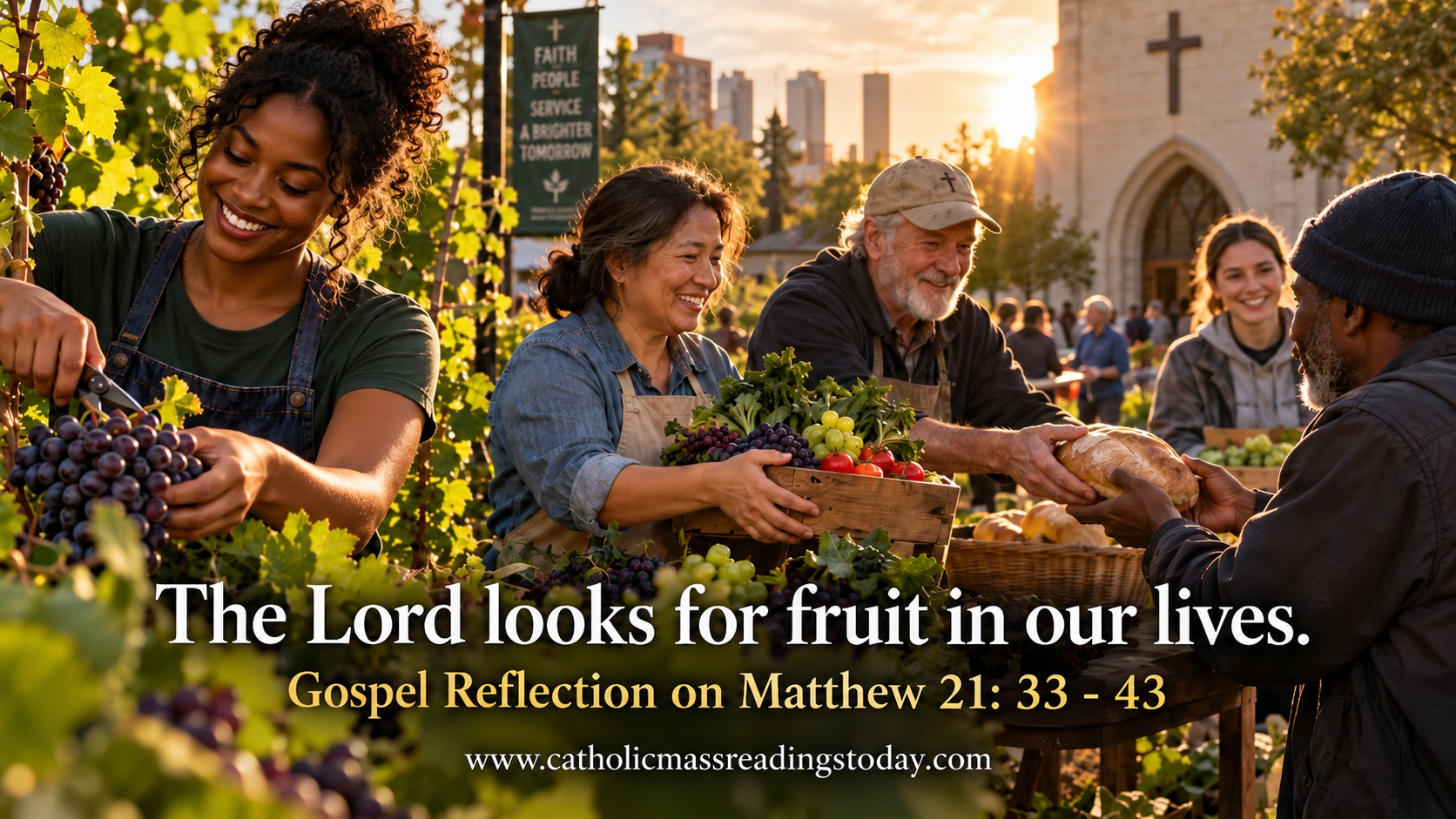
There is something deeply serious in this parable. The vineyard belongs to the householder. The tenants are given responsibility for it, but they do not own it. They are meant to care for it, to cultivate it and to return its fruit to the one to whom it truly belongs.
This is where the trouble begins. The tenants forget who the vineyard belongs to. They begin to live as though it were theirs.
When the owner sends servants to receive the fruit, they reject them. They beat one, kill another and stone another. Still, the owner keeps reaching out. He sends more servants, and they are rejected too.
Then comes the most astonishing part.
He sends his son.
“They will respect my son.”
The Beloved Son Sent Into the Vineyard
Jesus is speaking to the chief priests and elders, but He is also revealing the story of salvation. Again and again, God sent prophets to His people. Again and again, He called them back, He warned, He invited, He corrected, He pleaded, but again and again, His messengers were rejected.
Then, in the fullness of time, the Father sent His Son.
Not another servant.
His Son.
Jesus places Himself at the centre of the parable. He is the beloved Son sent into the vineyard. The words of the tenants are chilling:
“This is the heir… come… let us kill him.”
The Cross is already visible in the parable. The Son is rejected, cast outside and killed.
But the rejection of the Son does not defeat the plan of God.
Jesus continues:
“The stone which the builders rejected… has become the cornerstone.”
What human beings reject, God can make the foundation. What looks like defeat, God can turn into victory. The Cross, which appeared to be the end, became the place of redemption. The rejected Christ became the cornerstone of the new life God was building.
The Vineyard Is Also Our Life
This is where the Gospel becomes very personal, because the vineyard is not only a story about ancient Israel, but also a picture of everything God has entrusted to us.
Our life is a vineyard. Our time is a vineyard. Our gifts are a vineyard. Our family, our work, our faith, our opportunities, our responsibilities, all of these have been entrusted to us.
We are stewards, not owners, and one day the Lord looks for fruit.
That is the uncomfortable question in today’s Gospel:
What fruit is God finding in my life?
He does not look only for words. He looks for justice, for mercy, for repentance, for faithfulness, for generosity, for love, for the kind of life that shows that His grace has truly taken root in us.
The danger is that we can slowly begin to live as though everything belongs to us. My life, my plans, my time, my money, my abilities, my choices. But the Christian life begins when we remember everything is gift.
Everything has been entrusted to us, and gift creates responsibility.
God’s Patience Is Real, but It Calls for a Response
God is patient. The parable makes that very clear. The owner sends servant after servant. He gives the tenants repeated opportunities to respond.
God does not give up easily on His people. His patience is immense and His mercy is real.
But the parable also reminds us that His patience should not be mistaken for indifference.
Grace asks for a response, mercy calls for conversion and love looks for fruit.
Jesus says that the vineyard will be entrusted to those who will produce its fruits.
That warning is not meant to drive us into fear. It is meant to wake us up.
The question is not simply, “Do I belong to the vineyard?”
The deeper question is:
“Am I bearing fruit?”
Being Around the Things of God Is Not the Same as Belonging Fully to Him
It is possible to be surrounded by the things of God and still resist Him.
The chief priests knew Scripture, they knew the Temple, they knew religious tradition, yet Jesus was standing before them and they were in danger of rejecting the very One those Scriptures pointed toward.
We can face the same temptation.
We can know prayers, attend Mass, speak about faith and still resist the places where Christ is asking us to change. We can welcome the parts of the Gospel that comfort us and reject the parts that challenge us.
But Christ must become the cornerstone, not one stone among many.
The cornerstone.
The One around whom everything else is aligned.
When Christ Becomes the Cornerstone
If Christ is truly the cornerstone, then our decisions begin to change. Our relationships change. Our priorities change. The way we forgive changes. The way we use our gifts changes. The way we treat people changes. The way we understand success changes.
The vineyard begins to bear fruit.
Perhaps that is the invitation today: to look honestly at what God has entrusted to us and ask whether we are returning fruit.
Not perfection.
Fruit.
Maybe the fruit is patience in a difficult marriage, forgiveness after years of resentment, honesty in business, returning to prayer, going back to Confession, caring for someone who cannot repay us or maybe it is finally surrendering an area of life we have kept away from God.
The Lord has planted much in us. He has protected, He has provided, He has been patient and now He looks for fruit.
We Do Not Bear Fruit by Our Own Strength
The beautiful truth is that we do not have to produce that fruit by our own strength.
The cornerstone is Christ, the grace is His, the vineyard belongs to Him, our task is to remain faithful, to receive His grace and to let His life bear fruit in us.
The Gospel therefore leaves us with both a warning and a hope. The warning is that God’s gifts are not to be taken for granted. The hope is that the same Lord who calls us to bear fruit also gives us the grace to do so.
Let Us Pray
Lord Jesus Christ,
You are the stone rejected by the builders and the cornerstone chosen by the Father.
Teach us never to forget that our lives belong to You.
Everything we have… our time, our gifts, our relationships, our work, our opportunities… has been entrusted to us.
Forgive us for the times we have treated Your gifts as though they were ours alone.
Forgive us for the times we have resisted Your voice… ignored Your call… or refused the fruit You desired from our lives.
Make our hearts fruitful.
Where there is selfishness… teach us generosity.
Where there is resentment… teach us forgiveness.
Where there is pride… give us humility.
Where there is fear… give us trust.
Where there is sin… lead us to repentance.
May Christ be the cornerstone of everything we build.
May our lives produce the fruits of justice, mercy, faithfulness, charity and holiness.
And when You look upon the vineyard of our lives… may You find hearts that belong completely to You.
Through Christ our Lord.
Amen.