The Pillars of the Church Who Gave Everything for Christ
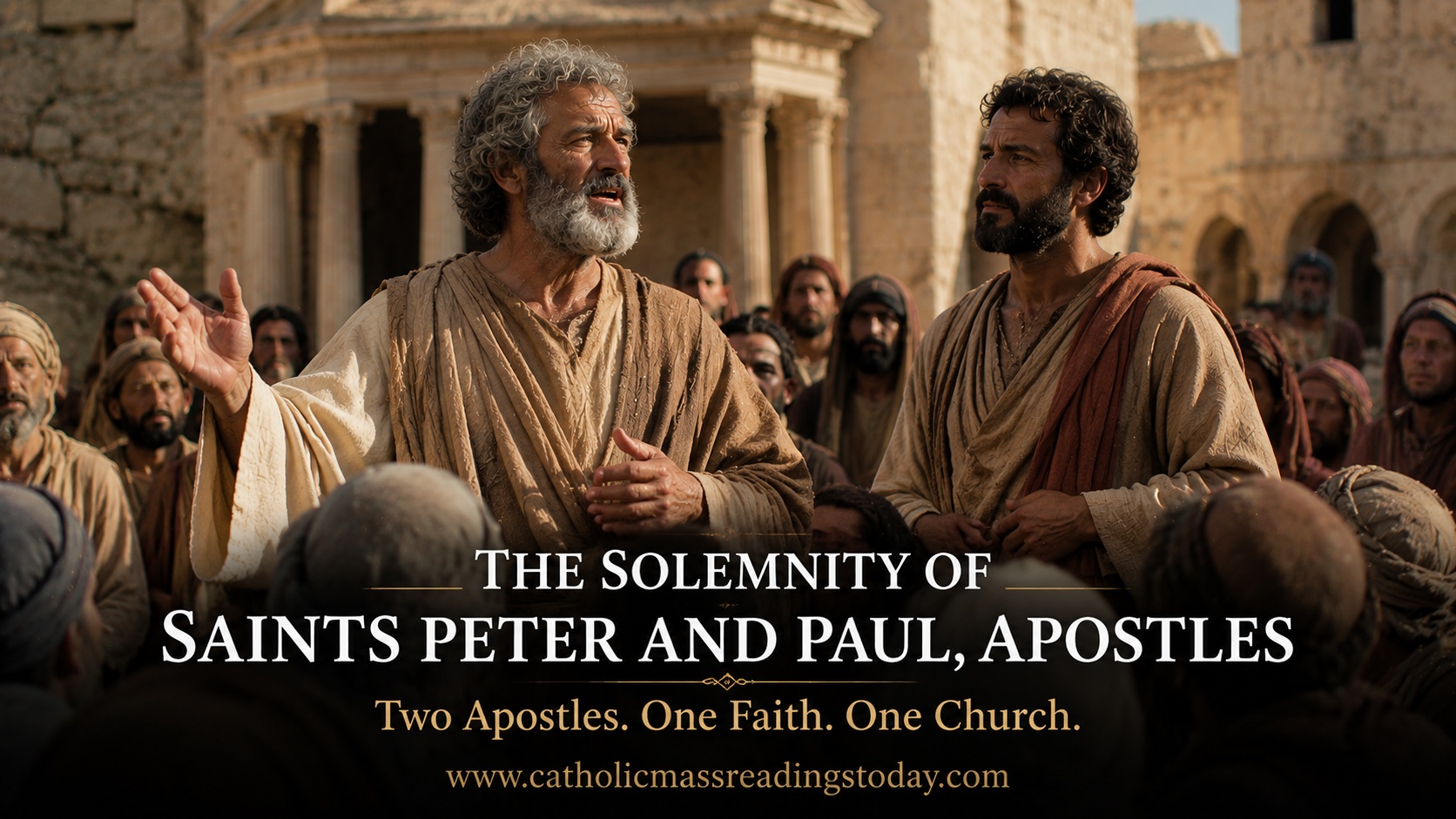
Every year on 29th June, Catholics throughout the world celebrate The Solemnity of Saints Peter and Paul, Apostles, one of the greatest feasts in the Catholic Church’s liturgical calendar. Unlike many other saints who are remembered individually, Peter and Paul are celebrated together because, although their lives were remarkably different, God united them in one extraordinary mission: to proclaim Jesus Christ to the world and to establish His Church upon a foundation that would endure through every generation.
Their feast is much more than a remembrance of two remarkable men. It is a celebration of God’s grace at work in ordinary human lives. Peter was a humble fisherman with little formal education. Paul was an accomplished scholar who once persecuted Christians. One was impulsive and emotional; the other was disciplined and intellectually gifted. Yet Christ transformed both into fearless witnesses whose preaching changed the course of history.
More than two thousand years later, their witness continues to inspire millions of believers across every continent. Their lives remind us that holiness is not reserved for the perfect. God calls ordinary people, heals their weaknesses, and uses them for extraordinary purposes.
Why Does the Catholic Church Celebrate Saints Peter and Paul Together?
At first glance, Peter and Paul appear to have very little in common.
Peter spent his early life casting fishing nets into the Sea of Galilee. Paul spent his youth studying the Jewish Law under the respected Rabbi Gamaliel.
Peter was among the first disciples personally called by Jesus during His public ministry. Paul never walked beside Jesus during His earthly ministry and initially opposed the Christian faith.
Peter preached primarily among the Jewish people. Paul became known as the Apostle to the Gentiles, carrying the Gospel into lands far beyond Israel.
Yet despite their different personalities, backgrounds, and missions, they shared one unwavering conviction: Jesus Christ is the Son of God, risen from the dead and Lord of all creation.
Tradition tells us that both apostles eventually came to Rome. There they strengthened the young Christian community, proclaimed the Gospel despite severe persecution, and ultimately gave their lives for Christ under Emperor Nero around AD 64 to 67.
For this reason, the Church has honored them together since the earliest centuries. Their united witness demonstrates that the Gospel transcends every difference of culture, education, personality, and background.
Saint Peter: The Fisherman Chosen by Christ
Before becoming the first leader of the Church, Peter was simply known as Simon, a fisherman from Bethsaida who later lived in Capernaum along the shores of the Sea of Galilee.
Fishing was demanding work. Long nights, uncertain catches, and harsh weather shaped Simon into a practical, hardworking man. He was married, as the Gospels later reveal through the healing of his mother-in-law (Matthew 8:14).
Nothing in Simon’s ordinary life suggested he would become one of history’s most influential religious leaders.
But God often calls people where they least expect it.
Jesus Calls Simon
One ordinary day, Jesus approached Simon and his brother Andrew with an invitation that would change everything.
“Follow me, and I will make you fishers of men.”
(Matthew 4:19)
Without fully understanding where this invitation would lead, Simon left behind his nets, his livelihood, and the familiar rhythm of his daily life to follow Jesus.
It was an act of remarkable trust.
From that moment forward, Simon became one of Christ’s closest companions, witnessing countless miracles and hearing teachings that would later shape the entire Christian faith.
A New Name, A New Mission
In biblical tradition, a new name often signified a new calling.
Jesus gave Simon exactly that.
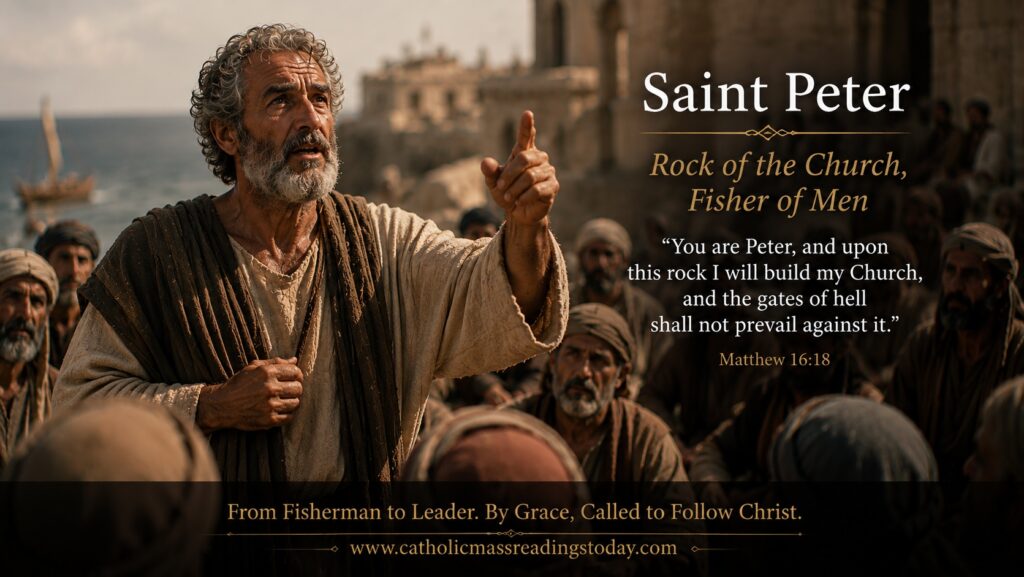
He renamed him Peter, meaning “Rock.”
This new name pointed not to Peter’s natural strength, but to the mission Christ intended for him.
Peter would become the visible leader of the apostolic community after Jesus’ Resurrection. His faith would serve as the foundation upon which Christ would build His Church, not because Peter was flawless, but because God would strengthen him through grace.
The Gospel proclaimed on this Solemnity captures this defining moment beautifully:
“You are Peter, and on this rock I will build my Church.”
(Matthew 16:18)
For Catholics, these words remain profoundly significant. They reveal Christ’s intention to establish a visible Church with apostolic leadership, a mission that continues today through the successors of Saint Peter.
Peter Was Not Perfect
One of the most encouraging aspects of Peter’s story is that Scripture never hides his weaknesses.
He often spoke before thinking.
He questioned Jesus.
He misunderstood many of Christ’s teachings.
When Jesus walked upon the water, Peter boldly stepped out of the boat, but soon became frightened and began to sink.
At the Last Supper, Peter confidently declared that he would never abandon Jesus.
Yet only hours later, overwhelmed by fear, he denied knowing the Lord three times.
These failures could have defined Peter’s life.
Instead, they became the place where God’s mercy transformed him.
After the Resurrection, Jesus did not reject Peter. Instead, beside another charcoal fire on the shores of Galilee, He gently restored him by asking three times:
“Do you love me?”
Each profession of love erased one denial and entrusted Peter with an even greater responsibility:
“Feed my sheep.”
This beautiful encounter reminds every Christian that failure is never the end of the story when we return to Christ with humble hearts.
Peter the Shepherd of the Early Church
Following Pentecost, Peter emerged as the visible leader of the infant Church.
The fearful disciple who had once denied Jesus now preached boldly before thousands.
On the day of Pentecost, filled with the Holy Spirit, Peter proclaimed the Gospel with such conviction that about three thousand people were baptized.
His leadership continued throughout the Acts of the Apostles.
He presided over important decisions.
He encouraged believers during persecution.
He strengthened the apostles.
He defended the truth of the Gospel.
Peter became exactly what Christ had called him to be, a shepherd after the heart of the Good Shepherd.
Miracles Through the Power of Christ
The Acts of the Apostles records numerous miracles associated with Saint Peter.
He healed the lame man at the Beautiful Gate of the Temple.
He restored Aeneas, who had been bedridden for years.
He raised Tabitha (Dorcas) from the dead.
His shadow itself became a source of healing as crowds gathered with deep faith in Christ.
Peter never claimed these miracles as his own achievements.
Again and again, he directed people toward Jesus.
His life demonstrates an important truth: God often works most powerfully through those who remain humble enough to recognize that every gift comes from Him.
Peter’s Imprisonment and Miraculous Rescue
Peter’s growing influence drew the attention of the authorities.
King Herod Agrippa arrested him, intending to execute him after the Passover.
While Peter remained chained between soldiers, something extraordinary happened.
The Christian community gathered in earnest prayer.
During the night, an angel of the Lord entered the prison.
Chains fell away.
Iron gates opened.
Peter walked out into freedom, astonished by God’s intervention.
This remarkable event, recorded in Acts 12, continues to inspire believers today.
It reminds us that prayer is never powerless.
Even when circumstances seem impossible, God remains able to act in ways beyond human expectation.
Peter in Rome
Ancient Christian tradition tells us that Peter eventually travelled to Rome, the heart of the Roman Empire.
There he continued preaching Christ despite growing persecution under Emperor Nero.
The Christian community in Rome looked to Peter as its shepherd.
From this ministry grew the historic See of Rome, which remains the center of Catholic unity today.
Peter did not lead the Church through political influence or earthly power.
He led through preaching, prayer, personal sacrifice, and unwavering fidelity to Christ.
His authority was always exercised as service, a model that continues to shape the ministry of every Pope.
Peter’s Greatest Legacy
Perhaps Peter’s greatest contribution was not his courage, his miracles, or even his leadership.
It was his unwavering testimony that Jesus is truly the Son of God.
His confession at Caesarea Philippi continues to echo throughout every generation:
“You are the Christ, the Son of the living God.”
Those words remain the foundation of Christian faith.
Every Catholic who professes the Creed stands alongside Peter in making that same confession.
His life assures us that Christ can transform weakness into strength, fear into courage, and ordinary lives into instruments of His saving work.
Saint Paul – From Persecutor to Apostle of the Nations
If Saint Peter teaches us that God can strengthen human weakness, Saint Paul teaches us something equally extraordinary: no one is beyond the reach of God’s mercy.
Among all the great conversions recorded in history, few are as dramatic or as inspiring as that of Saint Paul. Before becoming one of Christianity’s greatest missionaries, he was one of its fiercest enemies.
Yet the very man who once sought to destroy the Church would spend the rest of his life building it.
Saul of Tarsus
Saint Paul was born as Saul in the prosperous city of Tarsus, located in present day Turkey. Unlike Peter, who grew up as a fisherman, Saul received an excellent education.
He was born into a Jewish family belonging to the tribe of Benjamin and was also a Roman citizen, a privilege that would later help him during his missionary journeys.
Saul studied under Gamaliel, one of the most respected teachers of Jewish law. He became a Pharisee, known for his deep knowledge of Scripture, strict observance of the Law of Moses, and passionate zeal for the traditions of his ancestors.
To Saul, the growing Christian movement appeared dangerous. He sincerely believed that the followers of Jesus were leading people away from true worship.
Convinced that he was defending God, he became one of the Church’s most determined persecutors.
The Persecution of Christians
The Acts of the Apostles first introduces Saul during the martyrdom of Saint Stephen, the first Christian martyr.
While Stephen was being stoned to death, those carrying out the execution laid their garments at Saul’s feet.
Scripture tells us that Saul approved of Stephen’s death.
His campaign against Christians quickly intensified.
He entered homes.
He arrested believers.
He imprisoned both men and women.
His reputation became one of fear throughout the early Christian community.
Yet God was already preparing to change his heart.
The Road to Damascus
Everything changed on a journey to Damascus.
Saul was travelling there with authority to arrest more Christians.
As he approached the city, a brilliant light suddenly surrounded him.
He fell to the ground.
Then he heard a voice:
“Saul, Saul, why are you persecuting me?”
Confused, he asked,
“Who are you, Lord?”
The answer transformed his life forever.
“I am Jesus, whom you are persecuting.”
Blinded by the heavenly light, Saul was led into Damascus, where he remained without sight for three days.
During this time he fasted and prayed.
The proud Pharisee who believed he possessed all the answers became a humble seeker entirely dependent upon God’s mercy.
Ananias and Saul’s Baptism
The Lord then appeared in a vision to a disciple named Ananias.
Initially afraid because of Saul’s terrible reputation, Ananias obeyed Christ’s command.
He visited Saul.
Placed his hands upon him.
Prayed over him.
Immediately something like scales fell from Saul’s eyes.
He regained his sight.
He was baptized.
Filled with the Holy Spirit.
The persecutor had become a disciple.
This remarkable conversion remains one of the clearest demonstrations that God’s grace can completely transform a human life.
From Saul to Paul
As his mission expanded among the Gentiles, Saul became known by his Roman name, Paul.
The change symbolized something much greater than a different name.
His entire life had been redirected.
The energy once spent opposing Christ was now devoted entirely to proclaiming Him.
The man who had travelled to Damascus to imprison Christians now travelled across continents to establish Christian communities.
The Apostle to the Gentiles
While Peter’s ministry focused primarily on the Jewish people, Paul received a unique mission from Christ.
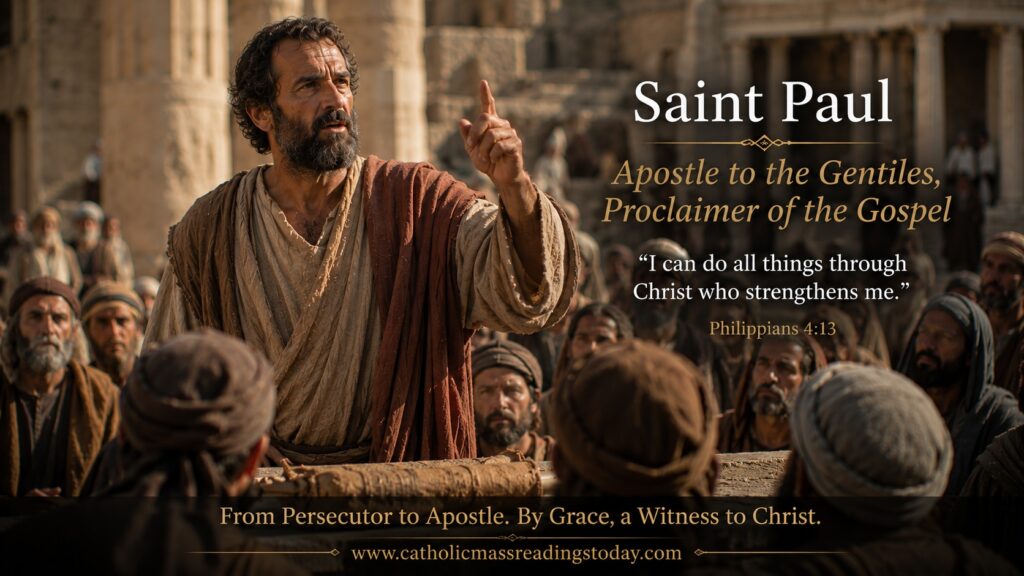
He became known as the Apostle to the Gentiles.
His missionary journeys carried the Gospel far beyond the borders of Israel into the cities of the Roman Empire.
He travelled thousands of kilometres on foot and by sea.
He preached in synagogues.
He spoke in marketplaces.
He addressed philosophers in Athens.
He proclaimed Christ before governors, kings, prisoners, merchants, soldiers, and ordinary families.
Everywhere he went, churches were born.
Paul’s Missionary Journeys
Paul undertook several remarkable missionary journeys that transformed the ancient world.
He visited places such as:
- Antioch
- Cyprus
- Philippi
- Thessalonica
- Corinth
- Ephesus
- Athens
- Malta
- Rome
These cities became important centres of Christian life.
Many of today’s New Testament letters were written to believers living in these communities.
His journeys were never easy.
He endured shipwrecks.
He suffered beatings.
He was imprisoned repeatedly.
He experienced hunger, cold, rejection, betrayal, and constant danger.
Yet nothing discouraged him.
He once wrote:
“I can do all things through Christ who strengthens me.”
(Philippians 4:13)
Those words continue to encourage Christians throughout the world today.
Paul’s Inspired Letters
Perhaps no apostle has shaped Christian theology more profoundly than Saint Paul.
Under the inspiration of the Holy Spirit, he wrote letters that now form a significant portion of the New Testament.
These include:
- Romans
- First and Second Corinthians
- Galatians
- Ephesians
- Philippians
- Colossians
- First and Second Thessalonians
- First and Second Timothy
- Titus
- Philemon
These letters continue to nourish the Church.
Within them Paul explains:
- salvation through Christ,
- the meaning of grace,
- the dignity of the Church,
- Christian marriage,
- unity,
- forgiveness,
- hope,
- holiness,
- eternal life,
- and the power of love.
One of Scripture’s most beloved passages comes from his First Letter to the Corinthians:
“Love is patient and kind…”
His writings remain among the richest treasures of Christian spirituality.
Miracles Through Saint Paul
Like Peter, Paul became an instrument through whom God performed remarkable miracles.
The sick were healed.
Evil spirits were cast out.
The dead were restored to life, most notably Eutychus, who fell from a third-story window while Paul was preaching.
Even handkerchiefs that had touched Paul were taken to the sick, who experienced healing through God’s power.
Yet Paul never sought personal glory.
Everything pointed back to Christ.
Peter and Paul: Different Men, One Gospel
Although Peter and Paul occasionally disagreed, most notably at Antioch, their differences never divided the Church.
Instead, they remind us that unity does not require uniformity.
Peter represented stability and pastoral leadership.
Paul represented missionary zeal and theological depth.
Together they demonstrated that the Holy Spirit works through different personalities, gifts, and backgrounds to accomplish one mission.
Both proclaimed the same Gospel.
Both preached the same Lord.
Both remained faithful to the same Church founded by Christ.
Their Martyrdom in Rome
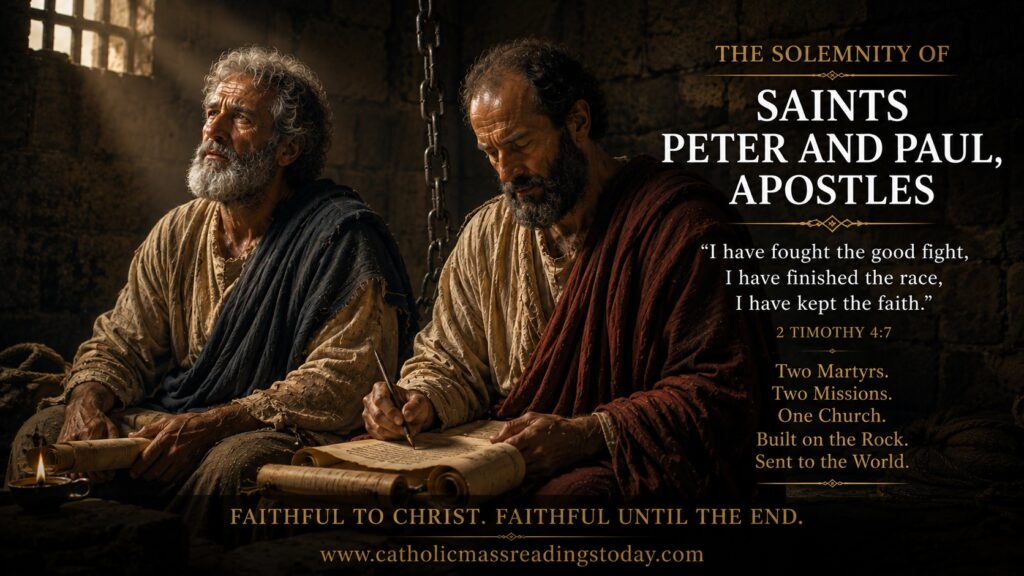
Tradition tells us that during Emperor Nero’s persecution of Christians, both apostles were arrested in Rome.
Peter, considering himself unworthy to die exactly as Jesus had died, requested to be crucified upside down.
His request was granted.
Paul, because he was a Roman citizen, was spared crucifixion.
Instead, he was executed by beheading along the Ostian Way outside Rome.
Their earthly journeys ended differently.
Their heavenly reward was the same.
Both sealed their witness with their blood.
Their martyrdom fulfilled Christ’s words that whoever loses his life for His sake will truly find it.
Why Their Witness Still Matters Today
Peter and Paul lived in an age filled with political uncertainty, religious conflict, persecution, and cultural confusion.
Their world was very different from ours in many ways.
Yet the human heart has not changed.
People still search for meaning.
They still long for hope.
They still wrestle with fear, suffering, and doubt.
Peter teaches us to trust Christ despite our weaknesses.
Paul teaches us never to lose hope in God’s mercy.
Together they remind us that the Church continues to stand not because of human perfection but because Jesus Christ remains faithful to His promises.
Their courage still inspires missionaries.
Their writings still guide theologians.
Their example still strengthens ordinary believers striving to follow Christ each day.
They remain two of the brightest lights in the history of Christianity.
Their Legacy and Lessons for Today
The story of Saints Peter and Paul does not end with their martyrdom. In many ways, it was only the beginning.
The blood they shed for Christ became the seed from which the Church continued to grow. Their preaching echoed throughout the Roman Empire, inspiring countless men and women to embrace the Gospel. Their witness continues to strengthen believers more than twenty centuries later, reminding us that faith rooted in Christ can withstand every trial.
Today, Catholics around the world still look to Peter and Paul as two of the greatest examples of discipleship. Their lives demonstrate that God’s grace can transform weakness into strength, fear into courage, and even past failures into powerful testimonies of His mercy.
The Lasting Legacy of Saints Peter and Paul
It is difficult to imagine the history of Christianity without these two apostles.
Saint Peter became the visible shepherd of Christ’s Church. His leadership helped preserve unity among believers during the Church’s earliest years. Every Pope, from Saint Peter to the present Holy Father, shares in this apostolic ministry of safeguarding the faith handed down by Christ and His apostles.
Saint Paul became Christianity’s greatest missionary. His journeys carried the Gospel into cities and cultures that had never heard the name of Jesus. Through his inspired letters, he continues to teach the Church about grace, faith, hope, charity, unity, and perseverance.
Their influence extends far beyond history books.
Every time Catholics celebrate the Holy Eucharist, profess the Nicene Creed, receive the Sacraments, or hear the writings of Saint Paul proclaimed at Mass, they experience the living legacy of these apostles.
Why Are Saints Peter and Paul Celebrated Together?
Although they served different missions, the Church wisely celebrates them together because their ministries perfectly complement one another.
Peter reminds us of unity.
Paul reminds us of mission.
Peter represents stability.
Paul represents expansion.
Peter cared for the Church from within.
Paul carried the Gospel outward to the nations.
Together they reveal two inseparable dimensions of the Church’s life: remaining faithful to Christ while courageously proclaiming Him to the world.
Their feast beautifully illustrates that the Church flourishes when truth and charity, tradition and evangelization, authority and missionary zeal work together under the guidance of the Holy Spirit.
Lessons Modern Catholics Can Learn from Saints Peter and Paul
1. God Calls Ordinary People
Neither Peter nor Paul was perfect.
Peter struggled with fear and impulsiveness.
Paul carried the painful memory of having persecuted Christians.
Yet God did not reject them because of their weaknesses.
Instead, He transformed them.
The same remains true today.
No matter our past mistakes, our limitations, or our fears, Christ continues to call each of us to holiness.
2. True Faith Requires Courage
Both apostles lived during a time when following Christ carried enormous personal risk.
They endured imprisonment.
Public ridicule.
Violence.
Eventually, martyrdom.
Their example reminds modern Christians that authentic discipleship sometimes requires difficult choices.
Standing for truth, defending the dignity of every human person, protecting the family, forgiving those who hurt us, and remaining faithful to Christ are acts of courage that continue their witness today.
3. Unity Is Essential
Peter and Paul occasionally disagreed, yet they never allowed disagreement to destroy communion.
In today’s world, where division often dominates public life, their friendship teaches us the importance of remaining united in Christ even when legitimate differences exist.
The Church is strongest when her members seek unity rooted in truth and love.
4. Every Christian Is Called to Evangelize
Evangelization is not reserved for priests, bishops, missionaries, or religious communities.
Every baptized Catholic has received the mission to share Christ.
Sometimes this happens through preaching.
Often it happens through quiet witness.
A kind word.
An honest day’s work.
Forgiveness.
Patience.
Charity toward those in need.
These simple acts become powerful ways of proclaiming the Gospel.
5. Perseverance Wins the Crown
Saint Paul beautifully summarizes the Christian journey:
“I have fought the good fight, I have finished the race, I have kept the faith.”
Holiness is rarely achieved through dramatic moments.
More often it is found in daily faithfulness.
Prayer.
The Sacraments.
Acts of mercy.
Trusting God through both joy and suffering.
Peter and Paul encourage us never to give up.
Catholic Devotions for the Solemnity of Saints Peter and Paul
Many Catholics mark this feast day by deepening their spiritual lives in practical ways.
These include:
- Attending Holy Mass on the Solemnity.
- Reading Acts 12:1 – 11, 2 Timothy 4:6 – 8, 17 – 18, and Matthew 16:13 – 19 prayerfully.
- Praying for the Holy Father, the successor of Saint Peter.
- Asking Saints Peter and Paul to intercede for the Church.
- Spending time before the Blessed Sacrament.
- Reading one of Saint Paul’s Epistles during the week.
- Performing an act of charity in honour of their missionary witness.
- Praying the Apostles’ Creed slowly and reflectively.
These simple devotions help unite our lives more closely with the faith these apostles courageously proclaimed.
Frequently Asked Questions
Why is the Solemnity of Saints Peter and Paul celebrated on 29 June?
The Church commemorates both apostles on 29 June because ancient Christian tradition holds that they were martyred in Rome during the persecution under Emperor Nero around this time. Their united feast celebrates their shared witness to Christ and their foundational role in the life of the Church.
Why are Peter and Paul called the “Pillars of the Church”?
They are called the Pillars of the Church because their ministries established and strengthened the early Christian community. Peter provided pastoral leadership and unity, while Paul carried the Gospel throughout the Gentile world.
Was Saint Peter really the first Pope?
According to Catholic teaching, yes. Jesus entrusted Peter with a unique pastoral mission when He declared:
“You are Peter, and on this rock I will build my Church.”
The bishops of Rome continue this apostolic ministry as Peter’s successors.
Why is Saint Paul called the Apostle to the Gentiles?
Paul received a special mission to proclaim Christ beyond the Jewish people. His missionary journeys brought Christianity throughout much of the Roman Empire.
How did Saints Peter and Paul die?
According to ancient Christian tradition:
- Saint Peter was crucified upside down.
- Saint Paul, being a Roman citizen, was beheaded outside Rome.
Both died as martyrs because of their unwavering faith in Jesus Christ.
Why are Saints Peter and Paul important today?
Their witness reminds Christians that faith must be lived courageously, the Gospel must be proclaimed faithfully, and God’s grace can transform every human life.
You are the Christ
Every generation of Christians faces its own challenges.
The first disciples confronted persecution.
Later generations defended the faith against heresy.
Today we encounter indifference, secularism, division, and many competing voices.
Yet Christ’s promise remains unchanged.
The Church continues to stand because its foundation is not human achievement but Jesus Christ Himself.
Saint Peter reminds us that Christ builds His Church through people willing to trust Him despite their weaknesses.
Saint Paul reminds us that no life is beyond the transforming power of God’s mercy.
Together they invite us to become faithful disciples who love Christ, serve His Church, and carry the Gospel into the world with joy and courage.
As we celebrate The Solemnity of Saints Peter and Paul, Apostles, may we renew our own commitment to Christ.
May we profess with Peter:
“You are the Christ, the Son of the living God.”
And may we persevere with Paul until we too can say:
“I have fought the good fight, I have finished the race, I have kept the faith.”
Prayer for the Solemnity of Saints Peter and Paul
In the Name of the Father, and of the Son, and of the Holy Spirit. Amen.
Almighty and Ever Living God,
You called Saint Peter to shepherd Your Church and Saint Paul to proclaim the Gospel to the nations. Through their prayers and example, strengthen us in faith, fill us with courage, and help us remain steadfast in following Your Son.
Grant that, like Peter, we may place our complete trust in Christ, even in moments of weakness. Like Paul, may we never tire of sharing the Good News with those around us through our words and our daily lives.
Protect Your Holy Church throughout the world. Bless our Holy Father, our bishops, priests, deacons, religious, and all the faithful. Unite us in truth, deepen our charity, and make us joyful witnesses of the Resurrection.
May the intercession of Saints Peter and Paul inspire us to persevere faithfully until we share with them the everlasting joy of Your heavenly Kingdom.
Through Christ our Lord.
Amen.
Saints Peter and Paul, pray for us.
You are invited to read
The Memorial of the First Martyrs of the Church of Rome | History, Meaning & Catholic Reflection