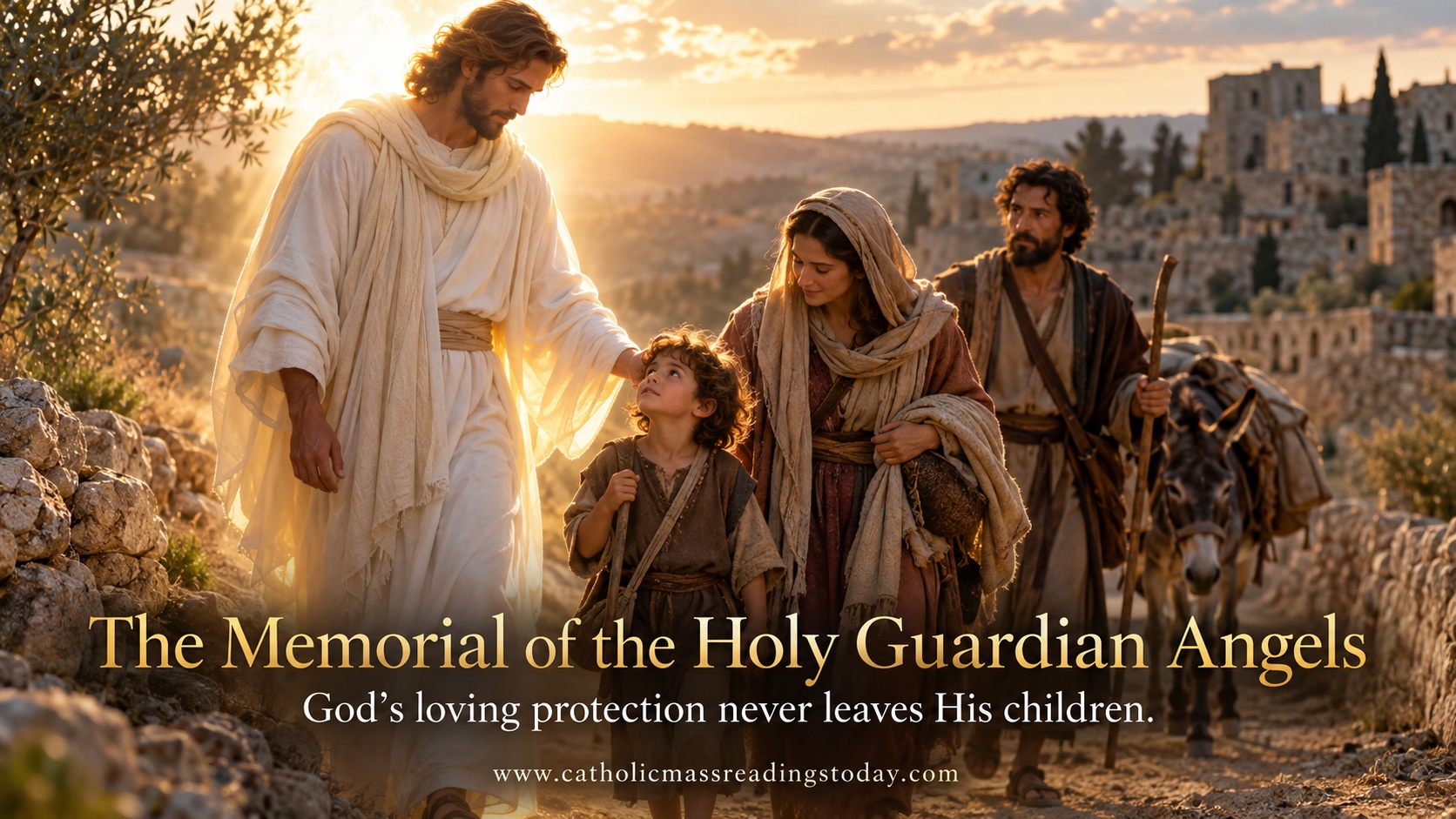
Every year on October 2, the Catholic Church celebrates the Memorial of the Holy Guardian Angels, a feast that draws our attention to one of the most reassuring truths of the Christian faith: that God, in His loving providence, has not left us to walk through life entirely on our own. The Church teaches that the angels are real spiritual beings created by God, endowed with intelligence and will, and called to worship Him while serving His divine plan. Among them are the angels entrusted with the care of human beings, whom Catholic tradition has long called the Holy Guardian Angels.
The devotion is not built on sentimentality or childhood imagination. It is rooted in Sacred Scripture, developed through the faith of the Church, and expressed in her liturgy and prayer. The guardian angel is not a rival to God, nor an independent spiritual power. The guardian angel is a servant of God, carrying out His will and assisting the human person on the journey toward holiness and eternal life.
To celebrate the Memorial of the Holy Guardian Angels is therefore to celebrate the providence of God. It is to remember that human life has value before heaven, that the visible world is not the whole of reality, and that God’s care surrounds us in ways we often do not see.
Who Are the Holy Guardian Angels?
The word “angel” comes from a term meaning “messenger,” and throughout Sacred Scripture angels appear as servants of God who carry His commands, announce His will, protect His people, strengthen the faithful, and participate in the great moments of salvation history. They are spiritual beings and should not be confused with human beings who have died. The Church has never taught that people become angels after death. Angels and human beings belong to different orders of creation, though both are called to serve and glorify God.
Guardian angels are those holy angels whom God appoints to assist human beings on the road of life. Their mission is not merely to prevent physical danger. Their deeper purpose is spiritual. They help lead us toward what is good, strengthen us in moments of temptation, and accompany us as we seek to remain faithful to God.
This understanding protects the devotion from becoming shallow. A guardian angel is not simply a heavenly bodyguard. The angel’s concern is not only whether we remain physically safe, but whether we remain close to God.
The Biblical Foundation of the Holy Guardian Angels
The belief in guardian angels has strong roots in the Bible. In the Book of Exodus, God tells His people that He is sending an angel before them to guard them on their journey and bring them to the place He has prepared. This passage presents angelic protection as part of God’s providential guidance.
The Psalms also speak beautifully about angelic care. Psalm 91 declares that God commands His angels concerning His people, to guard them in all their ways. This has long been one of the most beloved biblical expressions of trust in God’s protection.
Throughout the Old Testament, angels appear at decisive moments. An angel meets Hagar in the wilderness. Angels are involved in the rescue of Lot. An angel stops Abraham as he prepares to sacrifice Isaac. Elijah is strengthened by angelic assistance. The prophets receive visions that include angelic beings carrying out the will of God.
In the New Testament, the presence of angels becomes even more closely connected with the saving mission of Christ. Gabriel announces the conception of John the Baptist and later announces to the Blessed Virgin Mary that she will become the Mother of the Son of God. Angels proclaim the birth of Christ to the shepherds, minister to Jesus after His temptation, strengthen Him in His agony, and announce His Resurrection at the empty tomb.
All of these passages reveal a consistent biblical truth: God makes use of His angels in the unfolding of His plan of salvation.
“Their Angels Always Behold the Face of My Father”
One of the most important Gospel passages connected with the Holy Guardian Angels comes from Matthew 18. Jesus tells His disciples not to despise the little ones and then says that “in heaven their angels always behold the face of my Father who is in heaven.”
These words carry profound meaning.
Jesus connects the little ones with angels who stand before God. The people whom the world may consider weak, insignificant, or easily ignored are not forgotten by heaven. They are precious in the sight of God.
The phrase “their angels” has played an important role in the Church’s understanding of guardian angels because it suggests a personal connection between human beings and angelic care. It reveals both the dignity of the human person and the intimacy of God’s providence.
A child may appear powerless to the world, but not to God. A vulnerable person may be overlooked by society, but not by heaven. The Gospel reminds us that the value of a human life does not depend upon wealth, influence, strength, or social importance.
Guardian Angels and the Providence of God
The devotion to guardian angels must always lead us back to God.
- The angel is not the source of protection. God is.
- The angel is not the source of wisdom. God is.
- The angel is not the source of salvation. Christ is.
The guardian angel participates in God’s providence as a servant. When an angel protects, that protection is ultimately part of God’s care. When an angel guides, the purpose is to lead the person closer to God’s will. When an angel intercedes, the prayer is directed toward God.
This is why Catholics do not worship angels. Worship belongs to God alone. The Church honours the angels because they are holy creatures who serve Him perfectly.
Their greatness lies precisely in their obedience.
The Guardian Angel as Protector and Guide
Ancient Christian tradition often describes the guardian angel as a protector and shepherd. This image is especially helpful because a shepherd does more than prevent immediate danger. A shepherd watches, guides, protects, and leads toward a destination.
This is how the guardian angel’s mission should be understood.
The greatest danger to a Christian is not simply physical injury. The greatest danger is becoming separated from God through sin, spiritual deception, despair, or the gradual hardening of the heart.
For that reason, the guardian angel’s concern reaches deeper than bodily safety. The angel serves our eternal good.
This helps explain why devotion to the Holy Guardian Angels belongs naturally within the life of prayer, moral discernment, repentance, and Christian growth.
Guardian Angels Do Not Remove Human Freedom
The presence of a guardian angel does not mean that human beings lose freedom or responsibility.
God created us with the ability to choose. The guardian angel may assist, inspire, warn, and intercede, but does not force obedience.
- A person can still reject grace.
- A person can still choose sin.
- A person can still ignore conscience.
- A person can still walk away from God.
This is important because guardian angel devotion should never become an excuse for passivity. We remain responsible for our choices.
The angel helps us toward the good, but we must still respond.
Guardian Angels Do Not Mean a Life Without Suffering
The Church’s teaching on guardian angels should never be interpreted to mean that Christians will automatically be protected from every accident, illness, disappointment, or tragedy.
The lives of the saints make this obvious.
The martyrs suffered.
The apostles suffered.
Holy men and women endured illness, persecution, grief, and loss.
Jesus Himself entered suffering and death.
The purpose of the guardian angel is therefore not to guarantee a painless life. The deeper purpose is to assist us toward salvation.
There may be moments when divine providence protects us from physical harm in ways we never fully understand. At other times, God permits suffering and gives us the grace to remain faithful within it.
The presence of the guardian angel does not mean that nothing difficult will happen.
It means that we are not abandoned.
The Guardian Angels Throughout Salvation History
When we look across the whole of Scripture, we find angels appearing again and again in the history of salvation.
- They stand near Abraham.
- They accompany God’s people.
- They announce divine messages.
- They strengthen the weak.
- They guard.
- They worship.
- They serve.
They appear around the life of Christ from the Annunciation to the Resurrection.
The guardian angel belongs within this larger biblical picture.
The same God who sent angels throughout salvation history continues to care for His people.
The devotion to guardian angels is therefore not an isolated Catholic idea. It fits naturally into the biblical understanding of a universe filled with visible and invisible creatures serving the Creator.
The Early Church and the Growth of Guardian Angel Devotion
Belief in angelic guardianship did not suddenly appear in the Middle Ages.
The roots are much older.
The early Fathers of the Church reflected on the ministry of angels and spoke of their role in human life. Over time, this belief became increasingly expressed through Christian prayer, liturgy, and devotion.
The Church eventually established specific liturgical celebrations in honour of the angels. September 29 is dedicated to Saints Michael, Gabriel, and Raphael, the Archangels, while October 2 is dedicated to the Holy Guardian Angels.
This development shows how Catholic tradition often works. A truth rooted in Scripture and early Christian belief gradually receives fuller liturgical expression as the Church reflects upon it more deeply.
The History of the Memorial of the Holy Guardian Angels
The devotion to guardian angels was already widespread long before the memorial became universal.
Local celebrations existed in different parts of Europe, especially during the later Middle Ages and the early modern period. Over time, the Church gave the devotion a more formal place in the liturgical calendar.
In the seventeenth century, the celebration was extended more broadly through the Latin Church, and October 2 eventually became the established date for the Memorial of the Holy Guardian Angels.
The memorial’s placement immediately after the September 29 celebration of the Archangels is fitting. First, the Church honours Michael, Gabriel, and Raphael, the great named archangels of Scripture. Then, a few days later, attention turns toward the countless guardian angels who serve God in hidden ways while accompanying His people.
Saint Michael, Saint Gabriel, Saint Raphael, and the Guardian Angels
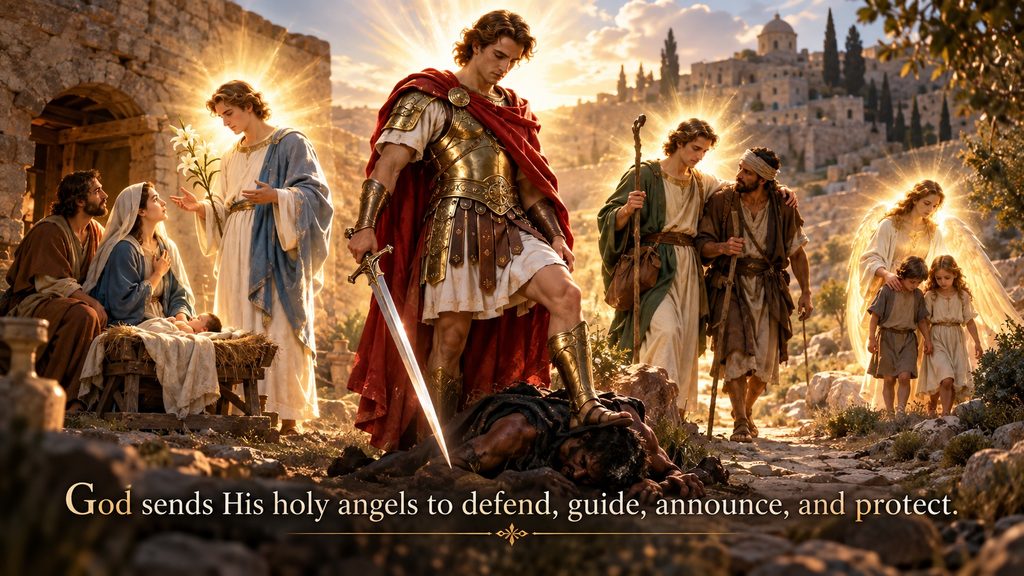
The closeness of the two celebrations helps us understand that the angels belong to one heavenly order of service.
Saint Michael is associated especially with spiritual battle and defence against evil.
Saint Gabriel is the great messenger of God’s saving word and is inseparably linked with the mystery of the Incarnation.
Saint Raphael appears in the Book of Tobit as a companion, guide, and healer.
The guardian angels share this same fundamental orientation toward God’s will. They serve, protect, guide, and assist according to the mission entrusted to them.
Their role is never self-centred.
Their whole existence points toward God.
The Holy Guardian Angels and the Mass
The Catholic Mass constantly reminds us that heaven and earth are not completely separated.
At every celebration of the Eucharist, the Church joins her worship to the worship of the angels and saints.
The Preface often speaks of angels, archangels, thrones, dominions, powers, and the whole heavenly host. Then the congregation joins the heavenly worship in proclaiming:
“Holy, Holy, Holy Lord God of hosts.”
This is not ornamental language.
It expresses the Church’s belief that the liturgy participates in heavenly worship.
The congregation gathered in a parish church is not spiritually isolated.
The angels worship God.
The saints worship God.
The Church on earth joins that worship.
The Memorial of the Holy Guardian Angels helps Catholics recover a deeper awareness of this mystery.
The Guardian Angel and Prayer
For many Catholics, devotion to the guardian angel begins in childhood.
The familiar prayer, “Angel of God, my guardian dear…”, is often one of the first prayers a child learns.
Because of this, adults sometimes dismiss guardian angel devotion as something mainly for children.
That is a mistake.
The prayer may be simple, but the truth behind it is profound.
To pray to one’s guardian angel is to remember that Christian life has an invisible dimension. It is to acknowledge that God has created a spiritual world beyond what the senses perceive and that He allows His angels to serve His people.
A mature devotion to the guardian angel should not make us childish.
It should make us more prayerful.
More attentive.
More responsible.
More aware of our need for God.
Can We Pray to Our Guardian Angel?
Catholic tradition has long encouraged the faithful to ask the Holy Guardian Angels for protection and assistance.
We may ask our guardian angel to help us resist temptation, remain faithful in prayer, make wise decisions, avoid spiritual danger, and grow closer to God.
But the devotion must remain Christ-centred.
The guardian angel should never become more important in our spiritual life than Jesus Christ, Sacred Scripture, the sacraments, prayer, and the life of the Church.
A healthy devotion to the angels always points beyond itself.
The guardian angel helps us toward God.
Why Catholics Should Avoid Inventing Names for Guardian Angels
Catholic spirituality also encourages caution regarding the naming of angels.
Scripture gives us the names Michael, Gabriel, and Raphael.
Beyond these, the Church has traditionally discouraged the practice of inventing or assigning personal names to guardian angels.
This is not because the Church rejects the personal reality of angels. Rather, it protects the faithful from unnecessary speculation.
Christian spirituality should not drift into curiosity about hidden identities, secret messages, or imaginative revelations.
The guardian angel’s mission is not to satisfy curiosity.
The angel’s mission is to help us become holy.
Guardian Angels and Spiritual Warfare
The Catholic faith recognizes that spiritual warfare is real.
Good and evil are not merely abstract ideas.
Sacred Scripture speaks clearly about the existence of fallen angels who rebelled against God.
At the same time, the Church warns against superstition, fear, and obsession.
Not every hardship is caused by demons.
Not every unusual experience is spiritual warfare.
Christian faith remains centred on the victory of Christ.
The guardian angels serve within that victory.
Their presence should therefore produce confidence, not fear.
God is sovereign.
Christ has conquered.
The angels serve His Kingdom.
Guardian Angels and Temptation
One of the most practical ways to understand guardian angel devotion is in moments of temptation.
Temptation often feels private.
No one else may know the struggle.
But Christian faith reminds us that we are never spiritually isolated.
The Holy Spirit strengthens us.
Grace is available.
The saints intercede.
The Church supports us.
And the angels serve God’s will.
A simple prayer to one’s guardian angel during temptation can help turn the heart back toward Christ.
The goal is not merely to avoid one bad action.
The goal is holiness.
The Holy Guardian Angels and Children
The Gospel associated with the memorial gives special attention to children and the little ones.
Jesus places a child in the midst of His disciples and teaches them about humility. He then tells them not to despise the little ones because their angels behold the face of the Father.
This connection has shaped Christian devotion for centuries.
Countless Catholic homes, schools, and churches have displayed images of guardian angels protecting children.
Sometimes these images can seem overly sentimental, but behind them lies a serious theological message.
Children possess immense dignity.
They deserve protection.
They deserve respect.
They deserve love.
A genuine devotion to the Holy Guardian Angels should therefore deepen the Church’s responsibility to protect children from abuse, exploitation, neglect, and every form of harm.
The Holy Guardian Angels and the Vulnerable
The same lesson extends beyond children.
The elderly, the disabled, the poor, the sick, the lonely, the unborn, and those who have little social influence all possess dignity before God.
The world often judges people by productivity.
By success.
By influence.
By appearance.
By usefulness.
God does not.
The doctrine of guardian angels reminds us that the value of a person does not depend on what that person can produce or offer society.
If heaven is concerned about the little ones, Christians should be concerned about them too.
The Guardian Angels and Family Life
Family life offers a natural place for guardian angel devotion.
Parents can pray for the protection of their children.
Children can be taught the traditional Guardian Angel prayer.
Families can ask for angelic protection before travelling.
Spouses can pray that their guardian angels help them grow in patience, forgiveness, and fidelity.
At night, a family may simply ask God to send His angels to guard the home.
These prayers should remain simple.
They do not need to become elaborate.
The deepest devotion often grows through ordinary faithfulness.
Guardian Angels and Daily Decisions
Much of Christian holiness is decided in ordinary moments.
A difficult conversation.
An opportunity to gossip.
A moment of anger.
A business decision.
A temptation.
A choice between selfishness and generosity.
A moment when forgiveness is difficult.
A decision that may affect another person.
These moments can seem small, but they shape the soul.
Devotion to the guardian angel can help us pause before acting.
A simple prayer can be enough:
Holy Guardian Angel, help me choose what is pleasing to God.
That prayer can become a habit of discernment.
Guardian Angels and Travel
Catholics have long prayed for angelic protection while travelling.
This has strong biblical foundations.
God sends an angel before Israel on the journey.
Raphael accompanies Tobias.
The Psalms speak of angels guarding the faithful along their path.
It is therefore entirely appropriate to ask for the protection of the guardian angel before a journey.
At the same time, prayer never replaces prudence.
We still drive carefully.
We still use seat belts.
We still plan responsibly.
Faith and common sense belong together.
The Holy Guardian Angels at the Hour of Death
One of the most moving dimensions of Catholic angelic devotion concerns the end of earthly life.
The Church’s funeral prayers often invoke the angels.
The ancient prayer “May the angels lead you into paradise” expresses the hope that those who have died in Christ will be accompanied into the presence of God.
This reminds us that the guardian angel’s mission is ultimately connected with eternity.
The Christian journey does not end with earthly safety.
It ends in God.
The Holy Guardian Angels and the Souls of the Departed
Catholic spirituality has often reflected upon the role of angels in relation to the souls of the faithful departed.
The Church encourages prayer for the dead and clearly teaches the communion of saints, the purification of souls, and the hope of eternal life.
At the same time, Catholics should be careful not to turn pious speculation into doctrine.
What can be said with confidence is that angels participate in God’s saving plan and that the Church invokes angelic assistance in her prayers for the departed.
Beyond that, humility is appropriate.
We do not need to know every hidden detail of the spiritual world in order to trust God.
Why We Cannot Normally See Our Guardian Angel
Some people wonder why guardian angels cannot usually be seen.
The answer is simple.
Angels are spiritual beings.
They are not physical creatures like human beings.
Scripture records moments when angels become perceptible to human beings, but those appearances are extraordinary and serve a particular purpose in God’s plan.
Christian faith does not depend on seeing angels.
The guardian angel belongs to the invisible order of creation.
Faith accepts that reality not because of imagination, but because of revelation.
The Holy Guardian Angels in the Modern World
The doctrine of guardian angels remains strikingly relevant today.
We live in an age surrounded by technology.
Phones can track locations.
Cameras can monitor buildings.
Cars contain safety systems.
Computers record information.
Medical science can observe more of the human body than ever before.
Yet none of these things can answer the deepest questions of the human heart.
Who accompanies us in loneliness?
Who sees the hidden struggle?
Who remains when nobody else understands?
Who helps direct the soul toward God?
The doctrine of guardian angels reminds us that human life has a supernatural dimension.
Reality is greater than what technology can measure.
Why Adults Need to Rediscover Guardian Angel Devotion
Adults often need guardian angel devotion more than they realize.
Children naturally know that they need help.
Adults become accustomed to self-sufficiency.
We plan.
We organise.
We control.
We build careers.
We manage responsibilities.
Then life reminds us that we do not control as much as we imagine.
Illness comes unexpectedly.
People we love die.
Plans fail.
Relationships change.
Faith is tested.
Temptations return.
In these moments, belief in the Holy Guardian Angels reminds us that dependence upon God is not immaturity.
It is truth.
What the Holy Guardian Angels Teach Us About Humility
The angels are powerful creatures, yet their greatness is expressed through service.
They do not compete with God.
They do not seek glory for themselves.
They carry out His will.
This makes them extraordinary teachers of humility.
Their worship and their obedience are inseparable.
For Christians, this offers an important lesson.
Prayer should become obedience.
Worship should become charity.
Faith should become action.
The more sincerely we praise God, the more willing we should become to do His will.
The Holy Guardian Angels and Obedience to God
The Gospel Acclamation associated with the angels expresses this beautifully: “Bless the Lord, all you his hosts, his ministers that do his will.”
The angels praise God through obedience.
That raises a question for us.
Can we truly say we worship God if we continually refuse what He asks of us?
If we pray but refuse to forgive, something is missing.
If we attend Mass but knowingly remain attached to injustice, something is missing.
If we speak about faith but do not love our neighbour, something is missing.
The angels remind us that worship and obedience belong together.
The Memorial of the Holy Guardian Angels and the Call to Holiness
At its deepest level, the Memorial of the Holy Guardian Angels is about holiness.
The angels are not given merely to keep us comfortable.
They assist us toward our eternal destiny.
Everything in Catholic life points toward that destiny.
- Baptism.
- The Eucharist.
- Confession.
- Sacred Scripture.
- Prayer.
- Charity.
- The communion of saints.
- The ministry of angels.
All of it draws us toward God.
The guardian angel serves that journey.
How Catholics Can Celebrate the Memorial of the Holy Guardian Angels
The memorial can be celebrated very simply.
A Catholic might begin the day by thanking God for His providential care and asking the guardian angel for assistance.
Attending Mass, where possible, is a particularly fitting way to celebrate because the liturgy already joins the Church’s worship to the worship of the angels.
A person may also spend time examining whether he or she is listening attentively to God, resisting temptation, protecting the vulnerable, and living with awareness of eternity.
The traditional Guardian Angel prayer can be prayed slowly rather than mechanically.
The day may also be marked by some quiet act of charity, especially toward someone easily overlooked.
The best devotion is the kind that changes how we live.
The Holy Guardian Angels and the Mission of the Christian
The angels protect, but they also serve.
This is important because devotion can become too centred on ourselves.
We can easily pray only for protection.
Protect me.
Help me.
Keep me safe.
These prayers are good.
But the angels teach us another prayer:
Send me.
Guide me.
Help me do God’s will.
Help me serve.
Help me become useful to the Kingdom.
The guardian angel does not exist simply to make our lives easier.
The guardian angel helps us become more faithful.
The Consolation of the Holy Guardian Angels
There are moments when a person can feel profoundly alone.
A private grief may seem impossible to explain.
A difficult season may feel endless.
Prayer may feel dry.
Friends may not understand.
Family members may be far away.
The future may appear uncertain.
The Memorial of the Holy Guardian Angels speaks gently into that loneliness.
You are not forgotten.
God knows you.
God sees you.
God’s providence surrounds you in ways you cannot always perceive.
This does not mean that every difficulty will disappear.
It means that no faithful struggle is unseen.
What the Holy Guardian Angels Reveal About God
In the end, the Memorial of the Holy Guardian Angels tells us more about God than about the angels themselves.
It reveals a God of providence.
- A God who cares.
- A God who values human life.
- A God who allows His creatures to participate in His work.
- A God whose concern reaches beyond what we can see.
The guardian angel reveals something of the tenderness of Divine Providence.
God could govern creation without the service of angels.
Yet He chooses to involve His creatures in His work.
Angels serve.
Saints intercede.
Parents care for children.
Christians serve one another.
Love becomes participation in God’s providence.
The Holy Guardian Angels and Our Final Destination
The guardian angel’s mission ultimately points toward heaven.
The final goal is not simply a safe life.
The goal is eternal life.
That changes everything.
A person can live comfortably and still lose sight of God.
Another person can suffer deeply and remain faithful.
From the Christian perspective, the greater question is not whether everything goes according to our plans.
The greater question is whether our life is moving toward God.
The guardian angel serves that final destination.
“In Heaven Their Angels Always Behold the Face of My Father”
The words of Jesus remain the most beautiful summary of this memorial:
“In heaven their angels always behold the face of my Father who is in heaven.”
The guardian angel lives, in a sense, between these two realities.
The angel beholds God.
And the angel serves us.
That tells us where the angel wants to lead us.
Not toward fascination with angels themselves.
Not toward spiritual curiosity.
Not toward signs and extraordinary experiences.
Toward the Father.
God is the destination.
A Prayer for the Memorial of the Holy Guardian Angels
Lord God, in Your loving providence You have appointed Your holy angels to watch over us and assist us on the journey of life. We thank You for the unseen ways in which Your care surrounds us and for the grace that constantly leads us back toward You.
Give us hearts attentive to Your voice and willing to follow Your will. Through the ministry of our Guardian Angels, protect us from spiritual danger, strengthen us against temptation, guide us when we are uncertain, and help us remain faithful to Jesus Christ.
Teach us to respect every human life, especially those who are small, vulnerable, forgotten, or easily overlooked. May our Guardian Angels accompany us in prayer, strengthen us in suffering, and help us grow in holiness.
At the end of our earthly journey, may we be welcomed into the joy of Your presence, where, together with the angels and saints, we may praise You forever.
Holy Guardian Angels, watch over us, guide us, and pray for us.
Through Christ our Lord.
Amen.