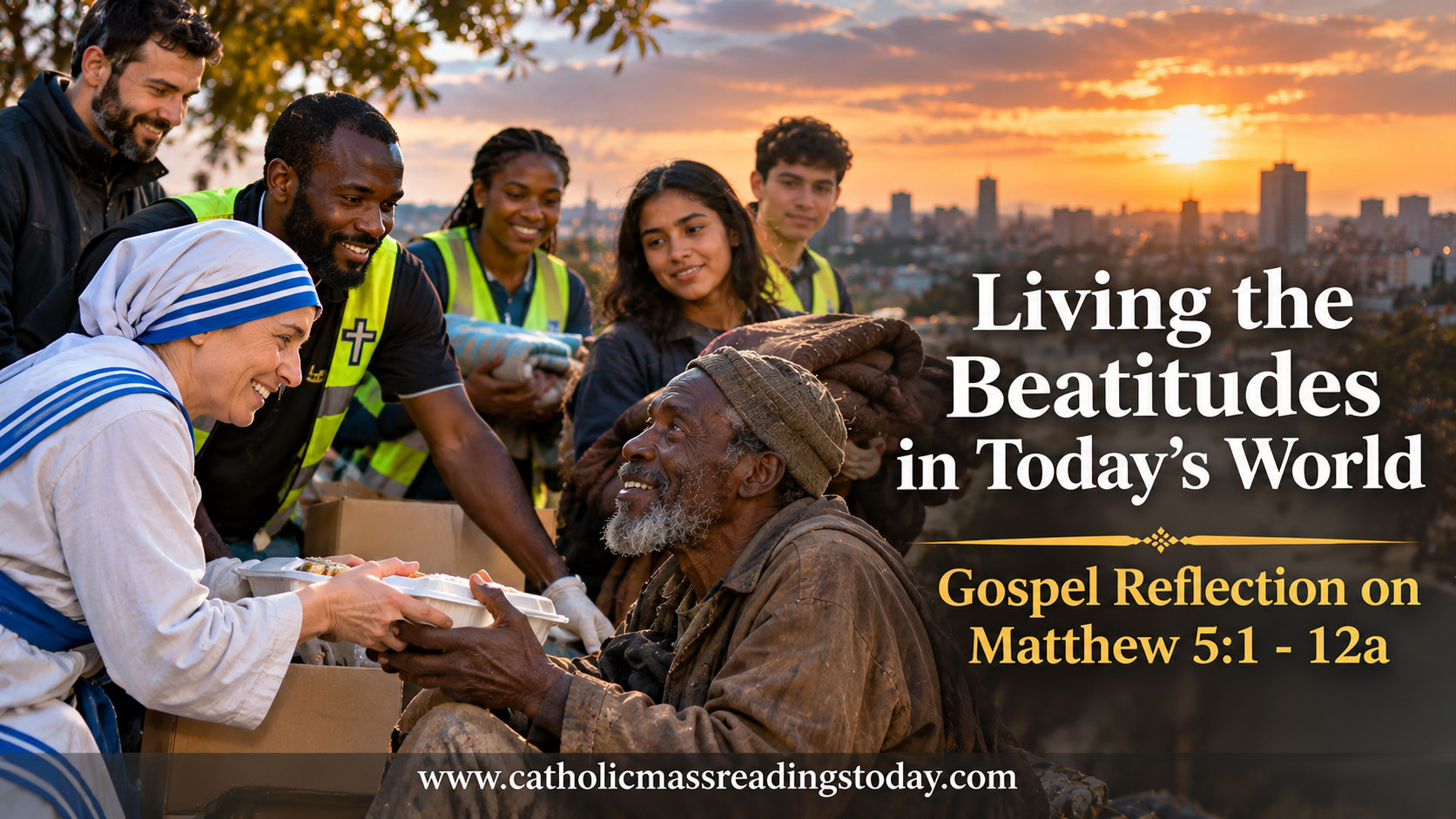
Blessed Are Those Who Walk in the Way of Christ
The Beatitudes: Jesus Reveals the Path to True Happiness
Today’s Gospel takes us to a mountainside where Jesus sits among His disciples and begins to teach the crowds. The words He speaks are among the most beautiful and demanding teachings in all of Sacred Scripture. We know them as the Beatitudes, the blessings through which Christ reveals the heart of His Kingdom and the kind of life to which every Christian is called.
“Blessed are the poor in spirit, for theirs is the kingdom of heaven.”
With these words, Jesus begins to describe a happiness that is very different from what the world usually promises.
The world often tells us that happiness comes from wealth, influence, admiration, and the freedom to live entirely according to our own desires. We are encouraged to seek comfort, avoid suffering, and measure our worth by what we possess or accomplish, yet Jesus presents us with another way.
He calls blessed those who are humble, those who mourn, those who hunger for righteousness, those who show mercy, and those who work for peace. At first, these teachings may seem difficult to understand. How can those who mourn be blessed? How can the meek inherit the earth? How can those who suffer persecution rejoice?
The answer lies in the meaning of Christian happiness.
Jesus does not promise a life without suffering. He promises that a life united with God possesses a hope that suffering cannot destroy.
The Beatitudes are not simply beautiful words intended to comfort us. They are an invitation to allow the grace of God to transform our hearts and guide the way we live.
Blessed Are the Poor in Spirit: Learning to Depend Upon God
When Jesus blesses the poor in spirit, He is not praising misery or suggesting that material poverty should be ignored. He is teaching us the importance of humility before God.
To be poor in spirit is to recognise that everything we possess is ultimately a gift and that our deepest security rests not in earthly possessions but in the love and providence of our heavenly Father.
A person may have great wealth and yet remain poor in spirit through generosity, gratitude, and sincere dependence upon God. Another may possess very little but still struggle with pride, bitterness, or attachment to worldly things.
What matters is the condition of the heart.
How easily we become convinced that our achievements are entirely the result of our own strength. We make plans, work hard, and seek to control the circumstances of our lives. Yet illness, disappointment, or an unexpected loss can quickly remind us how fragile human security truly is.
- The poor in spirit understand this fragility without surrendering to fear.
- They trust that God remains their Father even when life becomes uncertain.
- Their humility allows them to receive His grace with open hearts.
Perhaps today’s Gospel invites each of us to ask whether we have made sufficient room for God in our lives, or whether we have become so confident in our own abilities that we rarely remember our need for Him.
Blessed Are Those Who Mourn: The Tenderness of God’s Consolation
Jesus continues by declaring, “Blessed are those who mourn, for they shall be comforted.”
These words speak directly to those who carry sorrow in their hearts. There are people among us who have lost loved ones, parents who worry about their children, families struggling with illness, and individuals who quietly endure burdens that others cannot see.
Jesus does not dismiss their suffering. He does not tell them that their tears are a sign of weak faith, instead, He promises consolation.
The Christian faith does not teach us to pretend that suffering is insignificant. Even Jesus wept at the tomb of His friend Lazarus. But through His death and Resurrection, Christ has revealed that suffering and death do not have the final word.
For those who mourn, the promise of eternal life becomes a source of profound hope. This promise does not remove the pain of separation or make every difficulty disappear. Rather, it assures us that God’s love remains present even in the darkest moments.
We are also called to become instruments of that consolation. Sometimes a grieving person does not need many explanations. They need someone willing to sit beside them, listen patiently, and share their sorrow.
When we comfort those who suffer, we allow something of the compassion of Christ to become visible in our world.
Blessed Are the Meek and Those Who Hunger for Righteousness
The meekness that Jesus praises is often misunderstood. To be meek does not mean being weak, fearful, or unwilling to defend what is right.
Christian meekness is the strength of a heart that refuses to be ruled by anger, pride, or the desire for revenge.
Jesus Himself was meek and humble of heart, yet He spoke courageously against hypocrisy and injustice. His gentleness was never a surrender to evil. It was the expression of a love that remained faithful even when confronted with hostility.
How much our families, communities, and nations need this kind of strength today.
Many disagreements become painful because people are more concerned with winning an argument than understanding one another. Harsh words are spoken, relationships are damaged, and pride prevents reconciliation.
The meek person does not abandon the truth. Rather, he seeks to uphold it without hatred.
Jesus also blesses those who hunger and thirst for righteousness. This is the longing of a heart that desires what is just and holy in the sight of God. It is the desire to live truthfully, defend human dignity, resist corruption, and ensure that the vulnerable are not forgotten.
We cannot sincerely hunger for righteousness while remaining indifferent to injustice. Nor can we claim to seek God’s Kingdom while deliberately neglecting our responsibilities towards others.
The Beatitudes remind us that holiness must shape both our personal conduct and our concern for the wellbeing of our neighbour.
Blessed Are the Merciful and the Pure in Heart
“Blessed are the merciful, for they shall obtain mercy.”
These words reveal one of the central demands of Christian discipleship.
We all depend upon the mercy of God. Every time we approach the Sacrament of Reconciliation, we acknowledge our weaknesses and place our trust in the forgiveness Christ offers us.
Yet the mercy we receive must also influence the way we treat others. It is easy to ask God to forgive our mistakes while remaining unwilling to forgive those who have offended us.
Sometimes we carry resentment for years, allowing past injuries to shape our present relationships.
Jesus invites us to begin breaking that cycle. Forgiveness does not mean pretending that wrongdoing is acceptable or abandoning the pursuit of justice. It means refusing to let hatred become the master of our hearts.
A merciful person seeks the good of others, even when reconciliation requires patience, courage, and time.
The Lord also blesses the pure in heart, promising that they shall see God. Purity of heart is more than outward religious correctness. It is the sincere desire to love God without allowing dishonesty, selfishness, or sinful attachments to govern our lives.
- A pure heart seeks to be truthful before God and neighbour.
- It refuses to reduce other people to objects of personal desire or advantage.
- It learns to recognise the dignity of every person as someone loved by the Creator.
As our hearts are purified through prayer, repentance, and the grace of the sacraments, we become better prepared for the eternal communion with God for which we were created.
Blessed Are the Peacemakers: Becoming Instruments of Christ’s Love
Jesus declares, “Blessed are the peacemakers, for they shall be called sons of God.”
Peace is one of the deepest longings of the human heart, yet our world continues to suffer from conflict, violence, hatred, and division.
Even within our homes, peace can be disturbed by pride, impatience, and the unwillingness to forgive.
The Lord does not simply bless those who enjoy peaceful circumstances. He blesses those who actively work to bring peace where it is lacking.
A peacemaker is willing to listen before judging, to speak truth without cruelty, and to seek reconciliation where relationships have been wounded. This does not mean remaining silent before injustice or accepting evil for the sake of avoiding disagreement.
True Christian peace is inseparable from truth, justice, and charity. It is the peace that comes from allowing Christ to reign within the human heart.
We cannot bring peace to others if we continually allow resentment and bitterness to govern our own lives. So, the work of peace must begin within us. It begins when we choose patience instead of anger, forgiveness instead of revenge, and understanding instead of unnecessary judgment.
Every sincere act of reconciliation, however small, becomes a witness to the peace that Jesus came to establish.
Rejoice and Be Glad: The Hope That Awaits the Faithful
The final Beatitudes speak of those who suffer persecution for the sake of righteousness and those who are rejected because of their fidelity to Christ.
Jesus tells them, “Rejoice and be glad, for your reward is great in heaven.”
These words would become especially meaningful to the saints and martyrs who remained faithful to Christ despite suffering, imprisonment, rejection, and death.
On the Solemnity of All Saints, the Church remembers the countless men and women who have gone before us in faith and now share in the glory of heaven. Some are known throughout the world. Others lived ordinary lives, faithfully serving God within their families, communities, and places of work.
Their holiness was not always recognised during their earthly lives, yet their lives bore witness to the truth that the Beatitudes proclaim.
The saints were not people who never experienced weakness, temptation, or suffering. They were people who responded to God’s grace and persevered in following Christ. Their example reminds us that holiness is not reserved for a privileged few.
Every baptised Christian is called to become a saint. We are called to live the Beatitudes in the ordinary circumstances of our lives, through our responsibilities, relationships, struggles, and daily decisions.
The path to holiness may not always be easy, but it is never without hope. For the same Lord who calls us to follow Him also gives us the grace necessary to remain faithful.
Living the Beatitudes in Our Daily Lives
As we reflect upon today’s Gospel, we should resist the temptation to admire the Beatitudes merely as beautiful ideals.
Jesus gave them to us as a way of life. They challenge the pride that seeks recognition, the selfishness that closes our hearts to others, and the fear that prevents us from standing firmly in the truth. They invite us to become more humble, more merciful, more courageous, and more attentive to those who suffer.
A Christian who lives the Beatitudes may not always receive the admiration of the world.
There will be sacrifices that others do not notice, acts of kindness that receive no thanks, and moments when fidelity to Christ requires difficult choices. But the Gospel assures us that such faithfulness is never forgotten by God.
Perhaps today we should ask ourselves: Do the people who encounter me experience something of the humility, mercy, purity, and peace that Jesus teaches in the Beatitudes?
Our answer should lead us not towards discouragement, but towards conversion. We are all still learning to follow Christ. Through the grace of God, every day offers another opportunity to become more like Him.
The Beatitudes ultimately reveal the very heart of Jesus. He is poor in spirit, meek, merciful, pure of heart, and the true source of peace. He suffered rejection and persecution, yet remained faithful to the will of His heavenly Father.
To live the Beatitudes is therefore to allow our lives to be shaped by His example. May we never become so attached to the passing honours and comforts of this world that we forget the eternal joy for which we were created, and may we remember that the greatest blessing is not to possess everything our hearts desire on earth, but to belong to Christ and one day behold Him in the glory of heaven.
Rejoice and be glad, for your reward will be great in heaven.
May these words strengthen us whenever the road becomes difficult and remind us that a life faithfully lived in Christ is a life moving towards the joy of His eternal Kingdom.
Let Us Pray
Lord Jesus Christ, our Divine Teacher and Saviour, You ascended the mountain and revealed to Your disciples the path of true blessedness.
Look with mercy upon us today and teach us to live according to the Beatitudes.
Grant us humble hearts that depend upon Your grace rather than the passing security of worldly possessions.
Comfort those who mourn, strengthen those who suffer, and help us to become instruments of Your compassion.
Give us the meekness that overcomes anger, the courage to hunger for righteousness, and the generosity to defend the dignity of those who are vulnerable.
Make us merciful towards those who have offended us, just as You continually show mercy towards us.
Purify our hearts from selfishness, pride, and every attachment that separates us from Your love.
Teach us to become peacemakers within our families, our communities, and wherever You lead us.
When we encounter rejection or hardship because of our faith, grant us courage to remain steadfast in Your truth.
Through the intercession of the Blessed Virgin Mary and all the saints, strengthen us to persevere in holiness throughout our earthly pilgrimage.
May we never lose sight of the promise of eternal life, and may our hearts remain fixed upon the heavenly Kingdom where You dwell in glory.
You who live and reign with God the Father, in the unity of the Holy Spirit, God, for ever and ever.
Amen.